Plastics industry safety and gas handling: Best practices with nexAir KnowHow
Proper gas handling keeps your facility running smoothly and your team working safely. Most plastics manufacturers already follow solid safety practices, but there’s always room to tighten procedures and make sure everyone stays current on best practices. Good gas handling comes down to consistency – doing the same safe procedures every time rather than cutting corners when you’re busy.
Storage and Organization
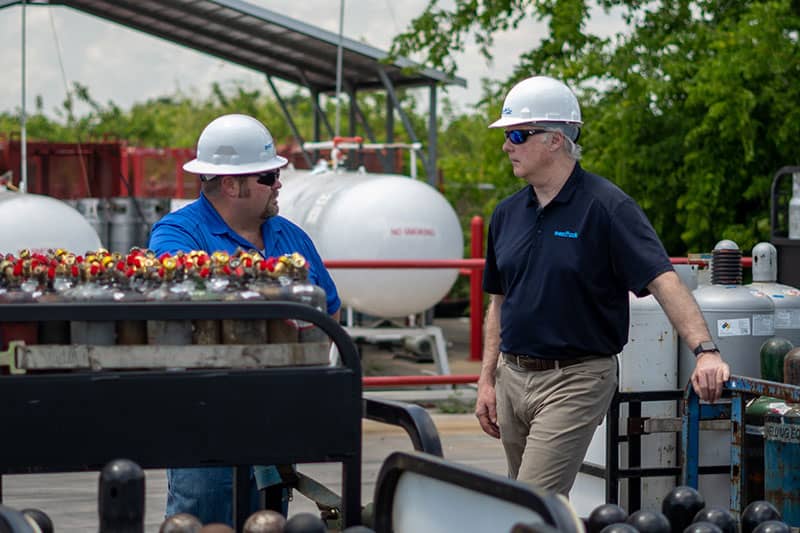
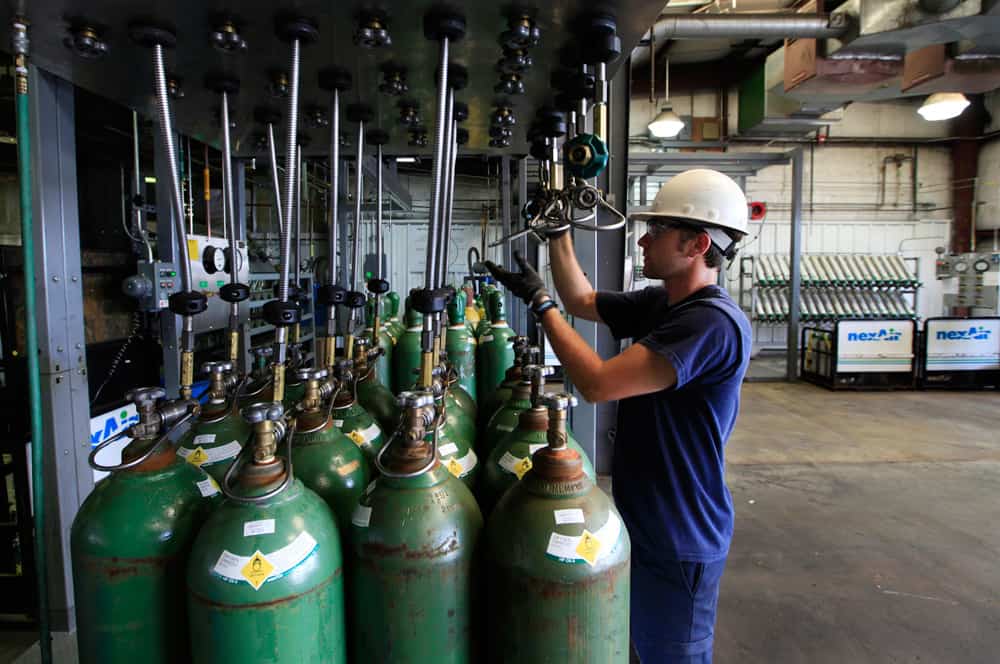
Keeping your gas storage area organized makes everything else easier. Secure all cylinders to walls, racks, or carts with chains or straps, which prevents tipping and damage. Separate full cylinders from empties using clear labels or designated areas so your team always knows what’s available. Store cylinders upright in well-ventilated spaces away from heat sources, direct sunlight, and high-traffic areas where they might get bumped by equipment.
Here are the key storage practices:
- Keep cylinder caps on when not in use to protect valves
- Maintain separation between oxygen and flammable gases (minimum 20 feet or use a fire-rated barrier)
- Rotate stock so older cylinders get used first
- Post clear signage identifying what gases are stored in each area
Ventilation and Monitoring
Nitrogen and other inert gases don’t have warning properties like odor or color, so adequate ventilation is essential in areas where they’re used. These gases displace oxygen, and oxygen levels below 19.5% create unsafe breathing conditions. Installing oxygen monitors in enclosed spaces where inert gases are used regularly provides an early warning system.
Good ventilation also helps with:
- Preventing gas accumulation in low areas where heavier-than-air gases settle
- Maintaining comfortable working conditions
- Meeting regulatory requirements for enclosed spaces
Training and Documentation
Everyone who handles gases should know the specific hazards associated with what your facility uses. Regular safety training keeps procedures fresh and gives new employees the foundation they need. Keep Safety Data Sheets accessible for all gases in your facility. Document your cylinder inventory, track inspections, and maintain records of equipment maintenance. This documentation satisfies regulatory requirements and gives you a clear picture of your safety practices over time.
Equipment Maintenance
Regular inspection of regulators, hoses, and fittings catches wear before it leads to failures. Check these components monthly for cracks, corrosion, or damage, and replace anything that shows problems. Don’t attempt repairs on damaged gas equipment – replacement is safer and more reliable.
Pressure relief valves, emergency shut-offs, and other safety equipment should be tested periodically to confirm they work correctly. Having safety equipment that doesn’t function when you need it is worse than not having it at all because it creates false confidence.
Building a Safety Culture
The best safety programs make proper procedures part of how work gets done rather than extra steps people skip when they’re rushed. We help you Forge Forward by providing training materials, helping set up storage areas that meet codes, and being available when questions come up about proper handling for specific applications. With our expert KnowHow™, you can run an efficient and safe operation.
Looking out for your future
Get your career going on the right track with nexAir
Find out how nexAir KnowHow has impacted businesses all over the Southeast
Our expertise makes us more than a valuable partner, it makes us headlines

Don't see what you're looking for?
Everything we offer is a click away and it will arrive before you know it.