Maintaining Compliance in Medical Gas Storage and Handling
Medical gas storage is one of the more frequently cited areas of non-compliance in healthcare facility inspections. The requirements under NFPA 99 and related codes vary based on the type of gas, the total volume stored, and where storage is located within the facility. Non-compliance creates both patient safety risks and regulatory exposure that can affect accreditation and CMS reimbursement.
Storage Requirements Are Volume-Driven
NFPA 99 ties storage requirements directly to the total volume of compressed gas in a given area. Individual cylinders secured to a stand or piece of medical equipment for immediate patient use are treated as in-use and are not subject to the same storage provisions as reserve quantities.
Once the aggregate volume in a smoke compartment exceeds 300 cubic feet, cylinders must be stored in a designated enclosure of non- or limited-combustible construction with secured access. When storage exceeds 3,000 cubic feet, more stringent construction requirements apply, including fire resistance rating requirements for the enclosure. Facilities storing oxidizing gases like oxygen and nitrous oxide also need to account for IBC and IFC quantity limits, which cap oxidizer storage at 1,500 cubic feet under standard conditions, doubling to 3,000 cubic feet in fully sprinklered buildings.
Segregation, Signage, and General Handling
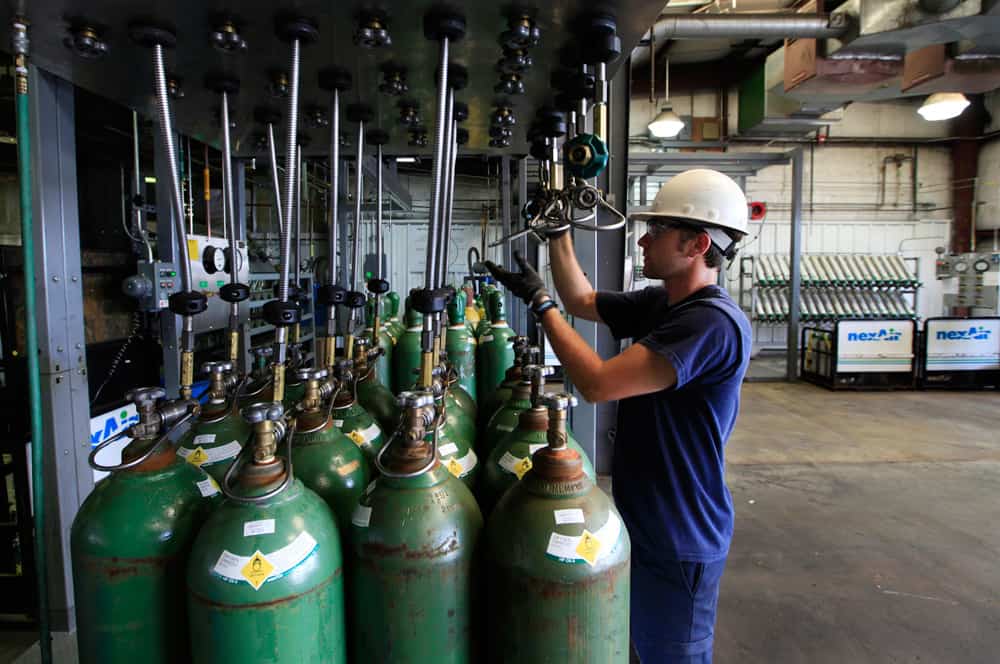
Flammable and non-flammable gases cannot be stored in the same enclosure. Empty cylinders must be clearly marked and kept separate from full ones. Cylinders must be secured against tipping or damage in all storage and use locations.
Signage requirements are specific and consistently cited during regulatory surveys. NFPA 99 requires precautionary signage on each door or gate of a storage enclosure that is readable from five feet away, noting the presence of oxidizing gases where applicable. Facilities using fire-rated doors also need to stay within the maximum allowable sign area under NFPA 80, which limits attached signage to five percent of the door face area.
Ventilation and Physical Requirements
Storage areas for medical gases require ventilation, with specific requirements depending on the gases stored and whether natural or mechanical ventilation is used. Temperature limits within storage areas are also addressed in the code, particularly where systems like fire sprinklers are present. Fuel-fired equipment is not permitted in medical gas storage rooms, and electrical fixtures must be positioned or protected to avoid damage from cylinders.
These details represent the kind of requirements that get missed when a space was not purpose-designed for medical gas storage from the outset.
Documentation and Ongoing Maintenance
Compliance over time requires more than a correctly designed space. NFPA 99 requires regular inspection, testing, and maintenance of medical gas systems, with records kept to demonstrate that work has been performed. Bulk oxygen systems require annual capacity reviews, and central supply systems require annual inspection of major components. Staff training on safe handling is also an expectation under the code.
Facilities that treat compliance as a one-time setup tend to accumulate gaps between inspections. A gas supplier with direct experience in healthcare environments can help facilities stay current with requirements and identify issues before they become regulatory findings.
nexAir’s KnowHow™ gives healthcare facilities the expertise and supply reliability to meet medical gas storage and handling requirements with confidence. Connect with nexAir today and Forge Forward with a partner that understands what compliance looks like in practice.
Looking out for your future
Get your career going on the right track with nexAir
Find out how nexAir KnowHow has impacted businesses all over the Southeast
Our expertise makes us more than a valuable partner, it makes us headlines

Don't see what you're looking for?
Everything we offer is a click away and it will arrive before you know it.