Industrial Gas Safety Training: Why It Matters for Modern Workplaces
Compressed gases behave differently from most industrial materials. They store enormous energy in a small volume, many react dangerously with common substances, and several are capable of creating hazardous conditions without any visible warning sign. A worker who handles cylinders daily without understanding those properties is working from incomplete information, and in gas environments, incomplete information tends to surface at the worst possible moment.
Solid safety training closes that gap. It’s also a legal requirement under OSHA 29 CFR 1910.101, which mandates that anyone who handles, uses, or stores compressed gas receives appropriate training on hazards, handling procedures, and emergency response before working with those materials.
What Training Needs to Cover
Effective gas safety training starts with the gases themselves. Workers need to know the specific properties of each gas they work with: whether it’s flammable, toxic, an asphyxiant, or an oxidizer, what concentrations are hazardous, and how it behaves if it escapes containment. A worker who knows nitrogen is inert might not immediately recognize that a nitrogen leak in a confined space can displace enough oxygen to cause unconsciousness within a few breaths. That context is what training provides.
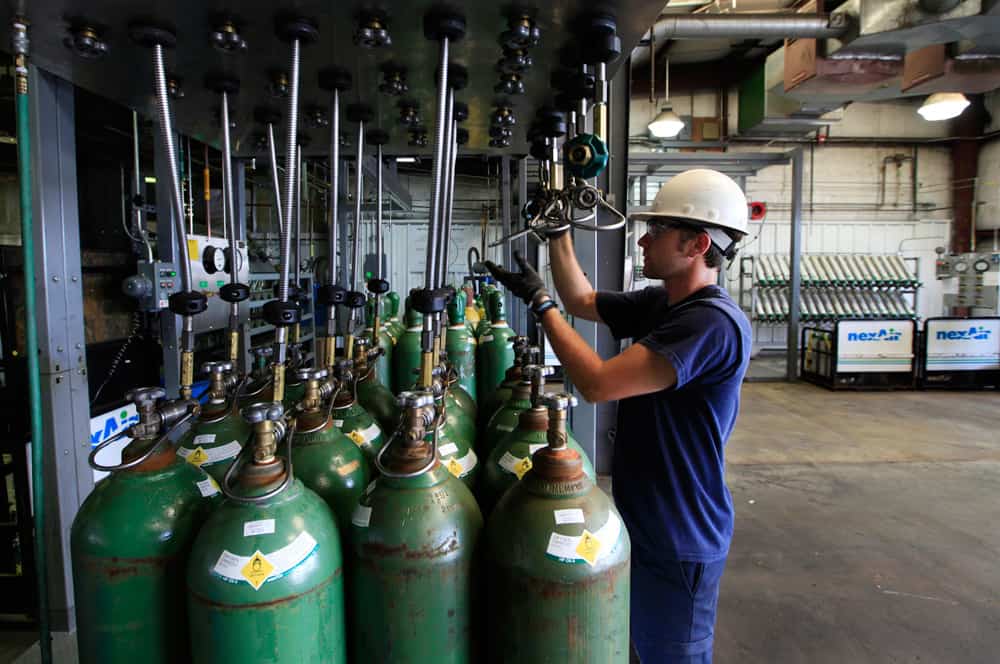
Cylinder handling is the next core area. Inspection procedures before placing a cylinder in service, correct transport methods, proper securing techniques, and the specific steps for connecting and disconnecting regulators all carry real safety weight. Improvised or careless technique in any of these steps has caused serious injuries, and the incidents are well-documented enough that OSHA and the Compressed Gas Association have built detailed guidance around each one.
Storage requirements, gas-specific PPE selection, and leak detection procedures round out the core curriculum. Workers should also leave training knowing how to read a Safety Data Sheet and where to find emergency contact information for each gas on-site.
Emergency Response Preparedness
Training that covers normal operations but skips emergency scenarios leaves a team half-prepared. OSHA requires employers to have written emergency procedures in place for gas releases, and workers need to know those procedures before an emergency occurs rather than during one.
That means knowing the evacuation routes and assembly points for gas-related incidents and knowing how to use the emergency contacts listed on shipping documents and SDSs. For facilities running flammable or toxic gases, practiced response protocols are what determine whether an incident stays contained.
Training Frequency and Refreshers
Initial training before first exposure is the baseline. OSHA recommends refresher training annually and whenever procedures, equipment, or the gases in use change. New hires, transferred employees, and anyone taking on gas-related responsibilities for the first time all need training before they start, not after their first close call.
Workforce turnover makes this an ongoing program rather than a one-time event. A training record for each employee is worth maintaining, both for internal safety management and for demonstrating compliance during an OSHA inspection.
Forge Forward with nexAir
nexAir brings the KnowHow™ to help customers build safer gas programs from the ground up. From the right gases and equipment to the expertise to support training and compliance, your local nexAir team is ready to help your operation Forge Forward with confidence.
Looking out for your future
Get your career going on the right track with nexAir
Find out how nexAir KnowHow has impacted businesses all over the Southeast
Our expertise makes us more than a valuable partner, it makes us headlines

Don't see what you're looking for?
Everything we offer is a click away and it will arrive before you know it.