Choosing the Right Welding Equipment for Construction Job Sites
Construction welding equipment needs to handle whatever the job throws at it. The machines you pick affect how fast your crew works and whether welds pass inspection. Getting the right equipment means fewer problems and better results on every project.
Match Power to Your Materials
Material thickness tells you how much amperage you need. Sheet metal and thin materials work fine with 150-180 amps. Structural steel beams need 200-250 amps to get good penetration. Heavy plate on bridges or large buildings often requires 300 amps or more. A machine that’s too weak can’t handle bigger jobs, while one that’s too powerful just costs extra money and weighs more than you need.
Think about what metals your crew welds every day. Carbon steel makes up most construction work and uses standard wire and gas. Stainless steel and aluminum need different supplies and sometimes need machines with better controls.
Think About Where You Work
Your work location changes what equipment works best. Indoor sites with good electricity let you pick any machine and focus on quality features. Outdoor jobs and generator power work better with equipment built to handle jumpy voltage. Newer inverter machines deal with bad power much better than older types.
How often you move equipment matters too. Machines under 50 pounds go anywhere one person can carry them, including upstairs and tight spots. Wheeled machines work great when you’re moving around at ground level all day. Engine-driven welders don’t need any site power and give you outlets for your grinders and other tools.
Pick the Right Process
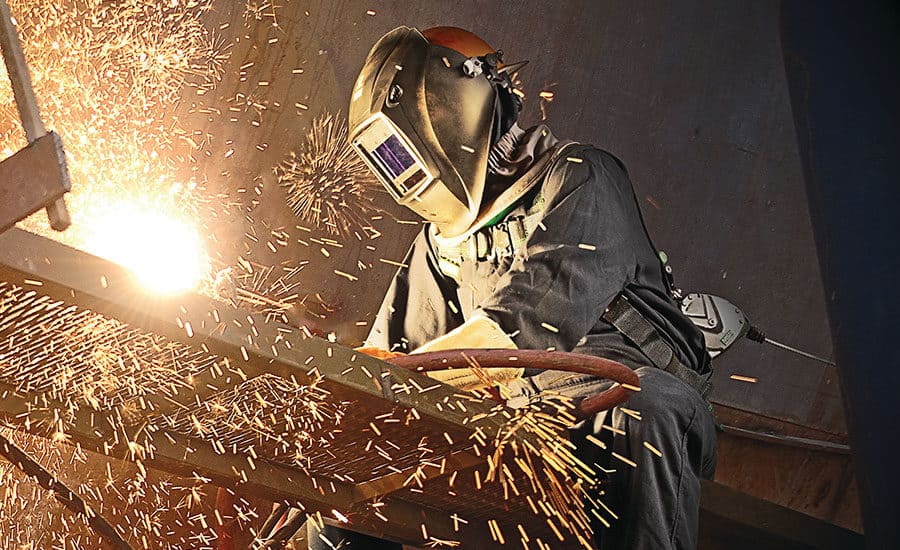
MIG welding gives you the speed most construction jobs need. The wire feeds automatically and keeps laying down metal at the same rate. It works in any position – flat, up and down, or overhead. MIG handles thin stuff and thick beams equally well, which makes it the go-to choice for general construction.
Stick welding works great outdoors where wind messes with MIG gas. The equipment stays small and light, and stick handles rusty or dirty metal better. Most contractors keep both types on hand.
TIG welding is for special jobs like stainless railings or aluminum repairs. It makes clean, good-looking welds for anything people will see. TIG runs slower but looks professional when appearance counts.
Check Duty Cycle Ratings
Duty cycle shows how long a machine runs before it needs to cool down. A 60% rating at 200 amps means you can weld six minutes out of every ten. This works fine for normal construction where you have breaks between welds. Jobs with lots of continuous welding need higher ratings so you don’t have to stop and wait.
Always check duty cycles at the amperage you actually use. A machine might run all day at 150 amps but only 40% of the time at full power. Better equipment keeps working through long days without issues. Look for smooth wire feeding, tough construction, and solid warranty coverage. Spending more on reliable machines saves money through fewer breakdowns.
nexAir’s expert KnowHow™ helps contractors pick equipment for their specific jobs. Contact us today to talk about welding equipment for your sites and Forge Forward with machines that fit your work.
Looking out for your future
Get your career going on the right track with nexAir
Find out how nexAir KnowHow has impacted businesses all over the Southeast
Our expertise makes us more than a valuable partner, it makes us headlines

Don't see what you're looking for?
Everything we offer is a click away and it will arrive before you know it.