Cryogenic Gases: Uses, Storage, and Safety Considerations
Cryogenic gases operate at temperatures below -150°C (-238°F), existing in a state that requires specialized handling and equipment. Liquid nitrogen, liquid oxygen, liquid argon, and liquid helium power applications across healthcare, manufacturing, research, and food processing. Their extreme cold presents both opportunities and hazards that demand careful management.
Industrial and Scientific Applications of Cryogenic Gases
Liquid nitrogen dominates cryogenic applications due to its availability and cost-effectiveness. Food processing facilities use it for flash freezing, which preserves cellular structure better than conventional freezing methods. The rapid temperature drop prevents large ice crystal formation, maintaining texture and nutritional quality in everything from seafood to prepared meals. Pharmaceutical manufacturers rely on liquid nitrogen for transporting temperature-sensitive medications and biological samples, while medical facilities use it for cryosurgery and preserving tissue samples, blood, and reproductive cells.
Liquid oxygen serves critical roles in steel production and wastewater treatment. Steel mills use it in basic oxygen furnace processes where its concentrated form increases combustion efficiency and reduces production time. Wastewater treatment plants inject liquid oxygen to support aerobic bacteria that break down organic contaminants, offering a more efficient alternative to mechanical aeration systems in space-constrained facilities.
Liquid helium operates at the coldest temperatures of any cryogenic gas, making it irreplaceable for superconducting magnets in MRI machines and particle accelerators. Research laboratories depend on liquid helium for experiments requiring temperatures near absolute zero. Liquid argon finds its place in electronics manufacturing and as a carrier gas in specialized analytical instruments where its inert properties protect sensitive processes from contamination.
Storage Requirements and Equipment Specifications
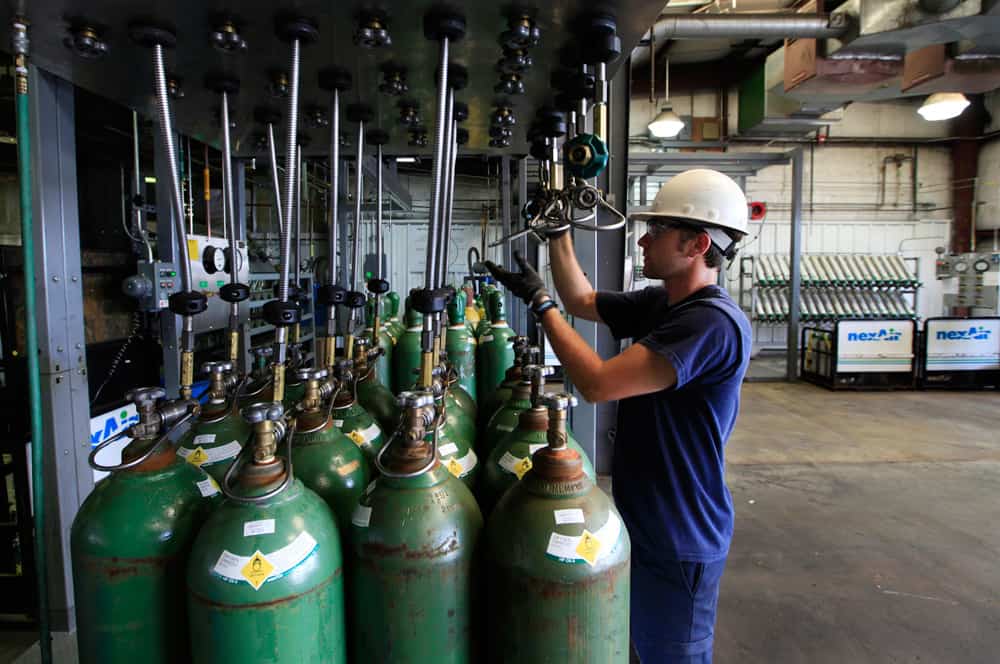
Cryogenic liquids expand up to 700 times their liquid volume when they vaporize, which creates significant pressure risks if containers lack proper venting. Storage tanks must include pressure relief valves, rupture discs, and vacuum-insulated walls to minimize heat transfer. Dewars and cryogenic cylinders use double-wall construction with vacuum insulation between layers, similar to a large-scale thermos bottle.
The materials used in cryogenic storage matter enormously. Many metals become brittle at extremely low temperatures, leading to catastrophic failures. Stainless steel, aluminum, and certain nickel alloys maintain their structural integrity at cryogenic temperatures. Carbon steel, by contrast, becomes dangerously brittle and should never contact cryogenic liquids directly. Gaskets, seals, and hoses require materials like PTFE (Teflon) or specially formulated elastomers designed for low-temperature service.
Facilities storing large quantities of cryogenic gases need adequate ventilation to prevent oxygen displacement or oxygen enrichment. Liquid nitrogen or argon leaks can displace breathable air, creating asphyxiation risks in enclosed spaces. Conversely, liquid oxygen leaks create oxygen-enriched environments where materials that don’t normally burn can ignite explosively. Storage areas require oxygen monitors, proper air circulation, and clear emergency procedures.
Safety Protocols and Risk Management
Contact with cryogenic liquids causes severe frostbite within seconds. The extreme cold destroys tissue similarly to a thermal burn, and the injury often extends deeper than initially apparent. Personal protective equipment must include insulated gloves designed for cryogenic service, face shields, and closed-toe shoes. Regular work gloves offer no protection against cryogenic temperatures.
Pouring or transferring cryogenic liquids generates cold vapor clouds that can obscure vision and create condensation on surrounding surfaces, making floors slippery. Transfer operations should occur slowly to minimize splashing and boiling. Filling warm containers too quickly can cause violent boiling and ejection of the liquid. Pre-cooling containers gradually reduces this risk.
Oxygen-enriched atmospheres present fire and explosion hazards that many facilities underestimate. When oxygen concentration rises above normal atmospheric levels (21%), organic materials like clothing, wood, and plastics become extremely flammable. A small spark or friction can ignite fires that spread with shocking speed and intensity. Facilities handling liquid oxygen must prohibit smoking, open flames, and spark-producing tools in storage and handling areas. Workers should avoid oil, grease, or other hydrocarbons on their clothing or skin when working near oxygen systems.
nexAir’s KnowHow™ in cryogenic gas management helps facilities implement comprehensive safety programs that address storage, handling, and emergency response. Proper training and equipment selection allow manufacturers and healthcare facilities to Forge Forward with cryogenic technologies while protecting workers and maintaining operational continuity.
Looking out for your future
Get your career going on the right track with nexAir
Find out how nexAir KnowHow has impacted businesses all over the Southeast
Our expertise makes us more than a valuable partner, it makes us headlines

Don't see what you're looking for?
Everything we offer is a click away and it will arrive before you know it.