How Automation and Efficiency Are Changing Welding in Construction
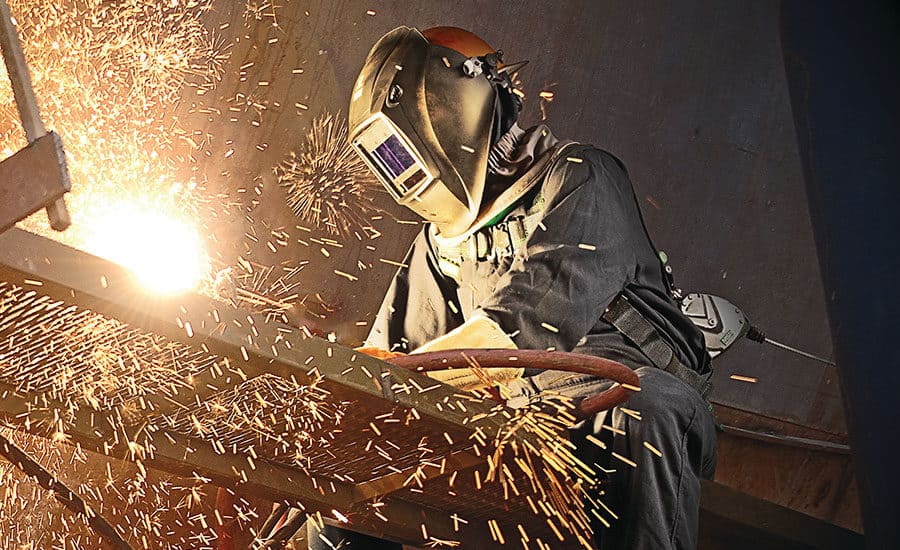
Construction welding is shifting away from purely manual work as new technologies reshape how projects get built. Automated systems now handle repetitive tasks that once required skilled welders to perform by hand for hours. These changes don’t eliminate the need for welders but instead let them focus on complex joints while machines take over the straightforward production work.
Robotic Welding Moves Into Fabrication Shops
Prefabrication facilities use robotic welding cells to produce identical components faster than manual methods allow. A robot programmed to weld beam-to-column connections repeats the same pattern perfectly on hundreds of pieces without variation. This consistency reduces inspection failures and rework while increasing daily output significantly.
The technology works best for repetitive welding on parts that can be positioned accurately in fixtures. Structural components like stair stringers, truss assemblies, and standardized beam connections are ideal candidates. Shops program the robot once, then run production continuously with minimal operator intervention beyond loading parts and checking quality.
Mechanized Travel Systems Speed Field Work
Field welding now uses mechanized carriages that move welding heads along seams automatically. These systems maintain consistent travel speed and torch angle on long, straight welds like column splices and beam flanges. The welder sets parameters and monitors the process rather than manually guiding the torch for the entire length.
Consistent travel speed produces more uniform welds with better penetration than freehand technique typically delivers. This reliability matters especially on critical structural connections where inspectors scrutinize every inch of the weld. Mechanized systems also reduce the physical strain of holding awkward positions for extended periods.
Orbital welding systems handle pipe connections on structural projects with plumbing or process piping components. The welding head clamps around the pipe and rotates completely around the joint while maintaining precise arc length. This automation ensures consistent root passes and fill layers that meet code requirements for pressure-rated systems.
Digital Systems Improve Weld Quality Control
Modern welding equipment monitors arc characteristics in real time and adjusts parameters automatically to maintain optimal conditions. Voltage fluctuations or changes in wire feed speed get corrected instantly without the welder noticing. This digital control produces more consistent results even when site power quality varies.
Some systems record detailed data about every weld including amperage, voltage, and travel speed throughout the entire joint. This documentation helps prove compliance with welding procedures during inspections. When questions arise about a specific weld, the data shows exactly what parameters were used.
Weld tracking cameras watch the joint ahead of the arc and adjust the torch position to follow the seam precisely. This technology helps on tack-welded assemblies where parts don’t always align perfectly. The automated tracking compensates for minor gaps or misalignment that would otherwise require constant manual correction.
Training Adapts to New Technology
Welding education now includes operating automated equipment alongside traditional manual skills. Students learn to program robotic cells and set up mechanized systems in addition to running stick and MIG processes. This broader skill set prepares them for modern fabrication environments where technology handles increasing amounts of production work.
Experienced welders benefit from retraining programs that teach automated system operation and programming. These skills open advancement opportunities beyond production welding into technical specialist roles. Companies investing in automation need workers who understand both welding fundamentals and how to maximize equipment capabilities.
Moving Forward with Technology
Construction welding increasingly combines automated efficiency with skilled manual work. Contractors who leverage nexAir KnowHow™ integrate new welding technologies effectively while maintaining the craft skills that complex projects demand. These partnerships help construction companies Forge Forward through improved productivity without sacrificing the quality that skilled welders deliver. Contact us today to discuss how automation and advanced equipment can support your construction projects.
Looking out for your future
Get your career going on the right track with nexAir
Find out how nexAir KnowHow has impacted businesses all over the Southeast
Our expertise makes us more than a valuable partner, it makes us headlines

Don't see what you're looking for?
Everything we offer is a click away and it will arrive before you know it.