How Automation Helps Solve Skilled Labor Shortages in Welding
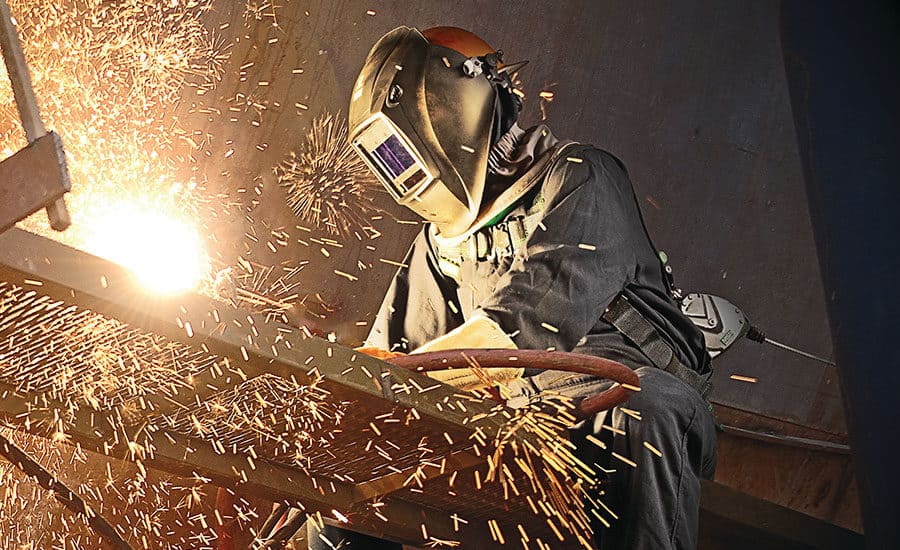
The welding industry faces a workforce crisis. The American Welding Society projects a shortage of hundreds of thousands of welders in the coming years, driven by retiring workers and fewer young people entering the trade. This gap threatens manufacturing capacity and drives up labor costs across industries. Automation offers a practical path forward, not by replacing skilled welders, but by extending their capabilities and filling gaps where manual welding creates bottlenecks.
Robotic Welding Systems Deliver Consistency at Scale
Robotic systems handle the repetitive, high-volume work that dominates production floors. While automotive manufacturers pioneered this technology decades ago, today’s systems have become accessible to fabrication shops of all sizes. These robots run for hours without breaks, executing spot welds, seam welds, and arc welds with unwavering consistency.
The real value lies in eliminating variation. Human welders have good days and bad days. They get tired. They interpret blueprints slightly differently. Robots don’t. Every weld matches the programmed specifications, whether it’s the first part or the ten-thousandth. This consistency reduces inspection time, cuts rework rates, and minimizes scrap.
Collaborative robots have changed operations for smaller companies. Unlike traditional industrial robots that require safety cages and dedicated floor space, cobots work alongside human welders. They handle the tedious positioning and repetitive sections while skilled workers focus on complex joints, problem-solving, and quality decisions. The lower cost and simpler setup make cobots practical for shops that couldn’t justify traditional automation.
Automation Changes Skills Rather Than Eliminating Jobs
The shift to automated welding doesn’t eliminate the need for expertise. It redirects it. Facilities still need people who understand welding, but now those people program robots, troubleshoot quality issues, and maintain sophisticated equipment rather than running beads all day.
Experienced welders make ideal robot operators. They already know metallurgy, understand how different materials behave under heat, and can spot quality problems instantly. Teaching them robot programming takes far less time than training someone to weld from scratch. Technical schools have caught on, offering programs specifically designed to transition manual welders into automation roles.
The work changes in ways many welders appreciate. Programming a robot to handle a complex assembly requires real problem-solving. First-article inspection demands expertise and judgment. Custom work still needs human hands and eyes. This variety tends to be more engaging than eight hours of production welding, and it’s certainly easier on the body. The physical toll of manual welding drives many skilled workers out of the trade. Automation can help them stay.
The Economics Justify Investment for High-Volume Work
Robotic welding cells can require substantial start-up costs. Basic systems start around $50,000, while sophisticated custom installations can exceed $200,000. For shops doing high-volume production, these numbers make sense. The robot works three shifts without overtime, never calls in sick, and produces consistent quality that reduces costly rework.
Payback periods typically fall within two to three years for operations with steady volume. After that, the savings compound. Lights-out manufacturing becomes possible, with robots welding through nights and weekends. Changeovers happen through software rather than physical setup, letting one system handle multiple products efficiently.
Quality improvements add value that’s harder to quantify but equally important. Less scrap means better material utilization. Fewer warranty claims protect reputation and margins. Faster, more predictable production cycles improve cash flow and make it possible to take on additional work without expanding facilities or scrambling to hire welders who don’t exist.
nexAir’s KnowHow™ helps manufacturers determine which welding operations benefit from automation and which still need human skill and judgment. The goal isn’t to eliminate welders but to let them Forge Forward by focusing their expertise where it matters most. Smart automation addresses the workforce shortage while respecting the irreplaceable value of skilled craftsmanship.
Looking out for your future
Get your career going on the right track with nexAir
Find out how nexAir KnowHow has impacted businesses all over the Southeast
Our expertise makes us more than a valuable partner, it makes us headlines

Don't see what you're looking for?
Everything we offer is a click away and it will arrive before you know it.