How Centralized Gas Distribution Improves Workplace Safety
Industrial facilities using cylinder-based gas systems scatter compressed gas vessels throughout the workspace. Welding stations, cutting tables, and process equipment each have their own cylinders that workers move regularly, swap when depleted, and navigate around during normal operations. Centralized gas distribution consolidates storage in a designated area and delivers gas through permanent piping to each point of use.
Centralized Systems Remove Pressurized Cylinders from Work Areas
Compressed gas cylinders present several hazards that multiply across a production floor. They can tip over if improperly secured, creating crush risks and potential valve damage that could turn cylinders into dangerous projectiles. Leaking gas creates asphyxiation risks in enclosed spaces or fire hazards depending on the gas type, which means each cylinder on the production floor represents a potential incident waiting to happen.
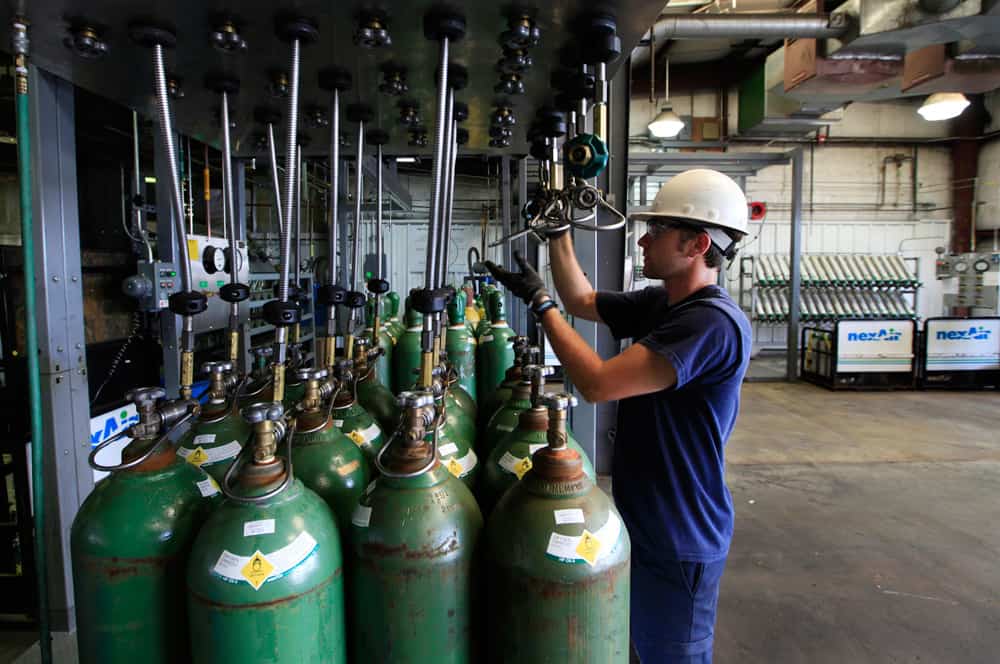
Centralized distribution moves cylinders out of the workspace entirely by relocating gas storage to a dedicated area with proper ventilation, organized layout, and controlled access. Workers can operate equipment without navigating around cylinder racks or worrying about valve protection, while the production floor gains valuable space and reduces the number of pressurized vessels that could be damaged by forklifts, falling materials, or careless handling.
Piping runs from central storage through walls or overhead to each workstation, where workers connect hoses to wall-mounted outlets rather than cylinder valves. The process becomes straightforward: open a valve when you need gas, close it when you’re finished. There’s no cylinder swapping, no moving pressurized containers around the floor, and no daily exposure to the risks that come with handling compressed gas vessels.
Leak Detection and Emergency Response Become More Manageable
Scattered cylinders create scattered leak risks throughout the facility. A fitting that loosens over time, a damaged hose connection, or a regulator malfunction can release gas anywhere on the floor, which means detection depends entirely on workers noticing symptoms or alarms placed throughout the facility responding quickly enough.
Centralized systems concentrate the most critical leak points in areas specifically designed and monitored for gas safety. The main storage location can have dedicated gas detection equipment, ventilation systems designed specifically for handling potential releases, and clear emergency procedures that everyone knows to follow. When leaks occur in distribution piping, shut-off valves at strategic locations can isolate affected sections without disrupting operations across the entire facility.
The central storage area typically sits outside or in a dedicated room built with safety features that wouldn’t be practical to replicate throughout a production floor. Adequate ventilation prevents dangerous gas accumulation, fire-resistant construction helps contain potential incidents, and clear signage marks both hazards and emergency equipment locations. Emergency responders appreciate knowing exactly where to go and what they’ll encounter rather than tracking down scattered cylinders across thousands of square feet of production space.
Training and Compliance Improve with Simplified Procedures
Every worker who handles cylinders needs comprehensive training on proper procedures, including how to secure cylinders, check for leaks, identify gas types, understand pressure ratings, and respond to emergencies. When cylinders scatter throughout the facility, essentially everyone on the floor potentially interacts with compressed gases and therefore needs this level of safety training.
Centralized systems dramatically reduce who needs hands-on cylinder handling training because most workers simply connect hoses to wall outlets and open valves. Only designated personnel access the central storage area and handle the actual cylinder changes, which allows facilities to provide more thorough training to a smaller group and maintain better oversight of the tasks that carry the highest risk. Drawing on nexAir’s KnowHow™ in system design helps facilities create centralized distribution layouts that match their specific operational needs and gas requirements.
Compliance becomes more manageable when facilities can focus safety protocols on the central storage area and the dedicated team responsible for it rather than trying to verify that dozens of workers across multiple shifts consistently follow proper procedures. Audits target specific areas, safety inspections have clear checkpoints, and manufacturers can Forge Forward with stronger safety records, streamlined compliance processes, and production teams that focus on their actual work instead of managing compressed gas logistics.
Looking out for your future
Get your career going on the right track with nexAir
Find out how nexAir KnowHow has impacted businesses all over the Southeast
Our expertise makes us more than a valuable partner, it makes us headlines

Don't see what you're looking for?
Everything we offer is a click away and it will arrive before you know it.