How Industrial Gas Supports the Aerospace Manufacturing Industry
Aerospace manufacturing demands precision that exceeds most other industrial applications. A commercial aircraft contains millions of parts that must perform reliably under extreme conditions—high altitude, temperature swings, vibration, and stress cycles that would destroy components in less demanding environments. Industrial gases play critical roles throughout aerospace production, from raw material processing to final assembly.
Welding and Fabrication Require Specialized Gas Mixtures
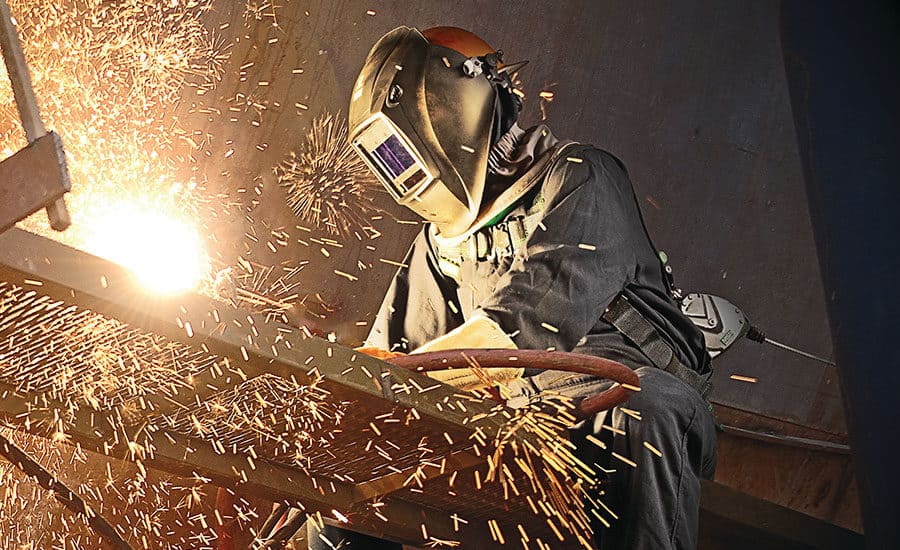
Aerospace structures rely heavily on aluminum, titanium, and exotic alloys chosen for their strength-to-weight ratios and performance characteristics. These materials present welding challenges that standard industrial approaches can’t handle. Titanium oxidizes rapidly when exposed to air at welding temperatures, forming brittle contamination that weakens joints. Aluminum’s high thermal conductivity and oxide layer require precise heat control and thorough shielding during welding.
Argon and helium mixtures provide the inert atmosphere necessary for TIG welding these sensitive metals. Pure argon works for many aluminum applications, while argon-helium blends offer better heat transfer for thicker sections or materials like titanium that need higher welding temperatures. The gas purity must be extremely high—even trace oxygen or moisture contamination ruins welds on reactive metals. Aerospace welders often use trailing shields and backing gas in addition to standard torch shielding to ensure complete protection throughout the weld zone.
Laser welding and electron beam welding have become common in aerospace manufacturing for joining thin materials and creating hermetic seals. These processes often occur in controlled atmosphere chambers filled with argon or helium to prevent oxidation. The gas quality and chamber management directly affect weld strength and long-term reliability in applications where failure isn’t acceptable.
Heat Treating and Metal Processing Depend on Controlled Atmospheres
Aerospace components undergo extensive heat treatment to achieve required mechanical properties. Hardening, tempering, annealing, and stress-relieving operations happen at specific temperatures in furnaces where atmospheric control prevents oxidation and decarburization. Nitrogen and hydrogen mixtures create reducing atmospheres that protect metal surfaces during heat treatment cycles, while endothermic or exothermic gas generators produce specific atmospheres tailored to different metals and processes.
Cryogenic treatment using liquid nitrogen has gained adoption for improving tool life and enhancing the dimensional stability of precision aerospace components. The extreme cold—below -300°F—alters the metal’s microstructure in ways that conventional heat treatment can’t achieve. Landing gear components, engine parts, and cutting tools used in aerospace manufacturing benefit from cryogenic processing that extends service life and improves performance consistency.
Additive manufacturing technologies like selective laser melting and electron beam melting build aerospace parts layer by layer from metal powder. These processes require inert atmospheres, typically argon or nitrogen, to prevent oxidation during the build process. The chamber must maintain extremely low oxygen levels throughout builds that can take days to complete, making gas purity and supply reliability essential.
Quality Control and Testing Use Multiple Gas Applications
Non-destructive testing methods verify component integrity without damaging parts. Leak testing using helium and mass spectrometry detects microscopic leaks in fuel systems, hydraulic components, and pressurized structures. Helium’s small molecular size lets it penetrate tiny defects that larger molecules can’t reach, making it ideal for finding leaks that would cause catastrophic failures in service.
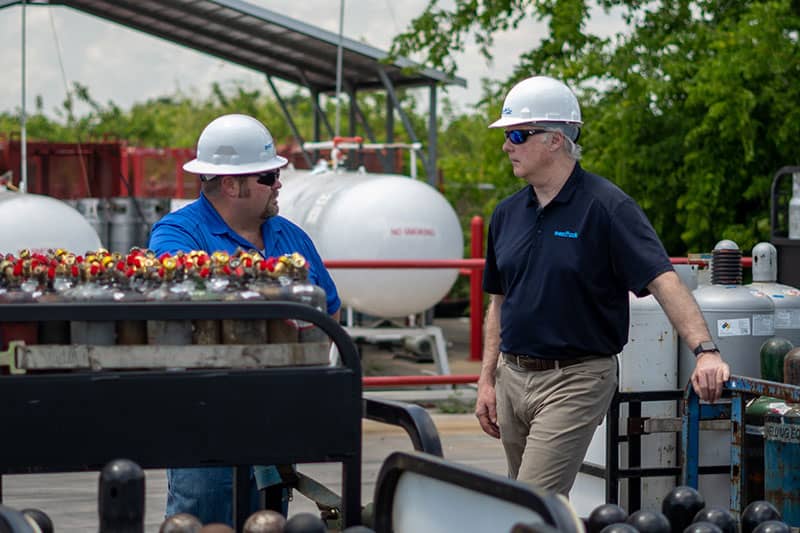
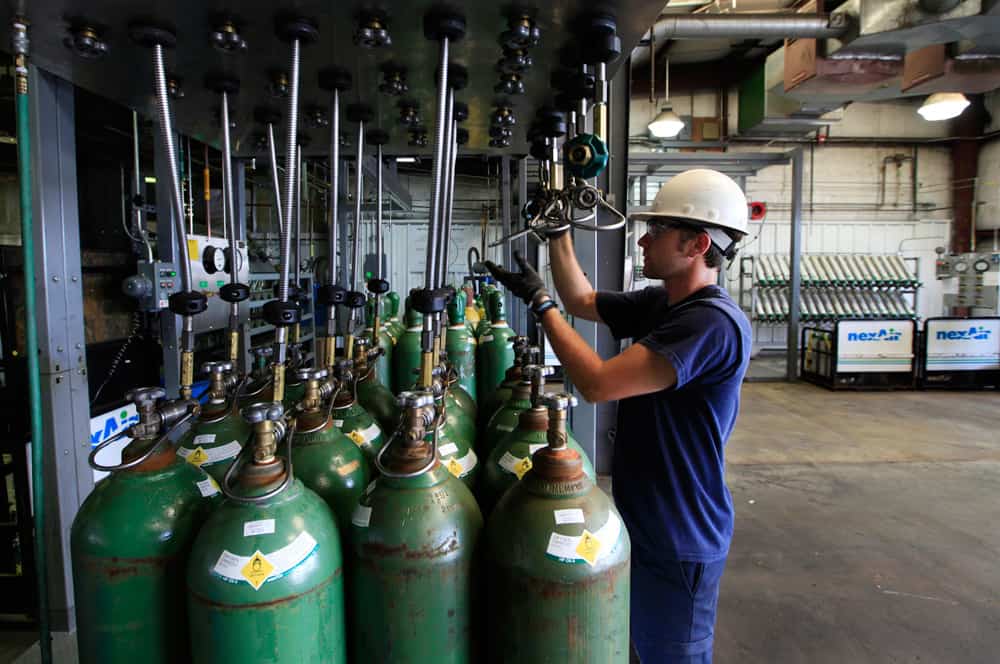
Pressure testing of completed assemblies requires large volumes of nitrogen or other inert gases to safely proof-test fuel tanks, hydraulic systems, and pressurized structures to loads exceeding normal operating conditions. Using inert gases instead of air eliminates fire risks during testing of fuel system components. The aerospace industry benefits from suppliers like nexAir who understand these demanding applications and can deliver the gas purity, supply reliability, and technical KnowHow™ that aerospace manufacturing requires to Forge Forward with zero-defect production standards.
Looking out for your future
Get your career going on the right track with nexAir
Find out how nexAir KnowHow has impacted businesses all over the Southeast
Our expertise makes us more than a valuable partner, it makes us headlines

Don't see what you're looking for?
Everything we offer is a click away and it will arrive before you know it.