How Robotic Welding Improves Consistency and Throughput
Welding quality varies. Even experienced welders have good days and bad days, produce slightly different results between morning and afternoon shifts, or interpret blueprint specifications with minor variations. These small inconsistencies compound across production runs, creating quality control headaches and rejection rates that eat into profit margins.
Robots Execute Identical Welds Repeatedly
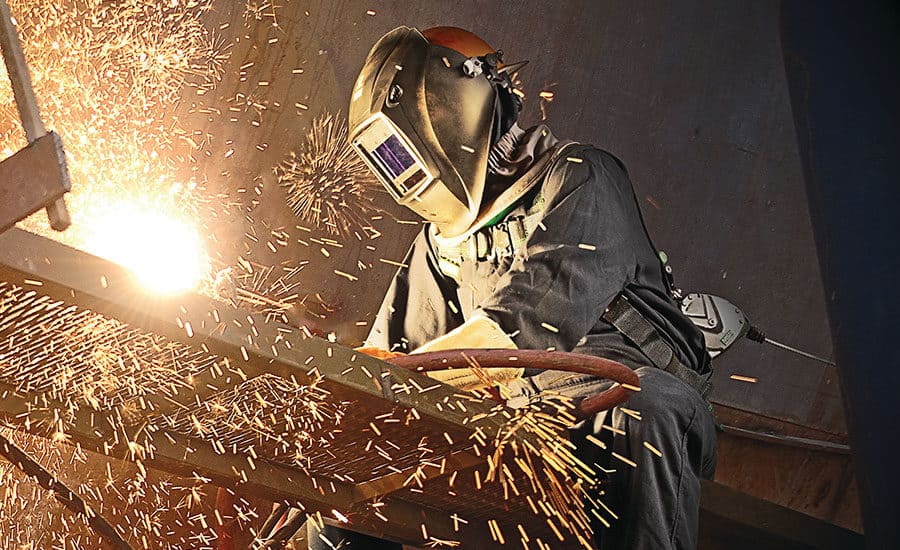
A robotic system welds part number fifty exactly like it welded part number one. The torch follows the same path at the same speed with identical wire feed rates and voltage settings. There’s no fatigue factor, no distraction from noise on the shop floor, no slight adjustment in technique between the start and end of a shift.
This matters most in production environments where hundreds or thousands of identical assemblies move through the facility. Automotive suppliers, agricultural equipment manufacturers, and HVAC fabricators can’t afford variation between units. When every weld must meet the same specifications, robotic consistency eliminates a major source of quality problems. Inspection becomes simpler because you’re verifying that the robot performed correctly rather than checking for human error across multiple operators.
The data component strengthens quality assurance further. Modern welding robots log parameters for every weld—voltage, amperage, travel speed, wire feed rate. If a quality issue surfaces weeks after production, the facility can review exactly what happened during that specific weld rather than trying to reconstruct events from memory and paper records.
Production Speed Increases Without Sacrificing Quality
Skilled welders work at a pace that balances speed with maintaining quality. Push too hard and defects increase. Work too cautiously and production schedules suffer. Robots don’t face this tradeoff. Once programmed correctly, they operate at optimal speed continuously.
The time savings show up in multiple ways. Robots don’t need to stop and chip slag, reposition themselves for better access, or take breaks. Arc-on time—the percentage of shift hours actually spent welding—increases dramatically compared to manual welding. A human welder might achieve 20-30% arc-on time after accounting for setup, material handling, and rest periods. Robotic cells regularly hit 70-80% arc-on time.
Changeover speed between different parts also improves with experience. Early robotic installations required significant downtime to switch between products. Current systems store programs for multiple parts and switch between them quickly. Some operations run mixed production batches where the robot welds several different assemblies in sequence without manual reprogramming.
Labor Allocation Shifts Toward Higher-Value Work
Robotic welding doesn’t eliminate the need for welders. It changes what they do. Someone must program new parts, perform first-article inspections, troubleshoot quality issues, and handle complex assemblies that don’t suit automation. These tasks require genuine expertise and pay accordingly.
Shops report that experienced welders often prefer robot programming and oversight roles once they adjust to the transition. The work involves more problem-solving and less repetitive motion. Physical wear decreases—no more hours in awkward positions or exposure to welding fumes. Many welders who might otherwise leave the trade due to physical demands can extend their careers by moving into automation roles.
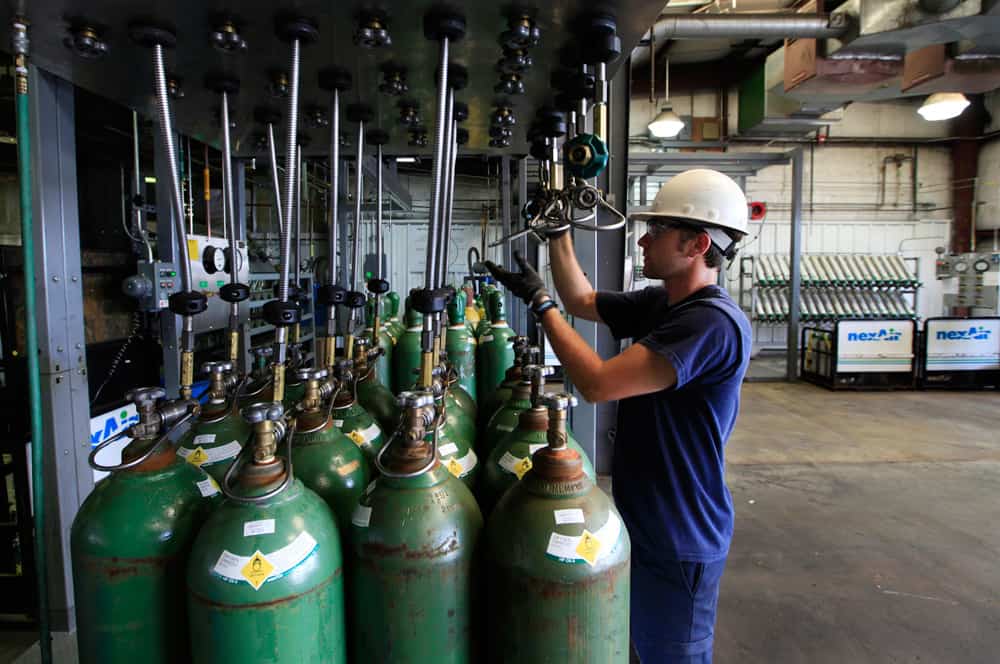
The production floor dynamics change as well. Facilities can maintain output levels with fewer welders, which helps address the ongoing shortage of qualified workers. Entry-level positions decrease while specialized technical roles increase. Training requirements shift from developing manual welding skills to understanding robotic systems, programming, and maintenance. Companies investing in automation find that nexAir’s KnowHow™ helps them select appropriate shielding gases and supply systems optimized for robotic applications, letting them Forge Forward with reliable gas delivery matched to increased production demands.
Looking out for your future
Get your career going on the right track with nexAir
Find out how nexAir KnowHow has impacted businesses all over the Southeast
Our expertise makes us more than a valuable partner, it makes us headlines

Don't see what you're looking for?
Everything we offer is a click away and it will arrive before you know it.