How Shielding Gas Selection Affects Weld Quality
Shielding gas does more than protect the weld pool from the atmosphere. It shapes the arc, influences penetration depth, affects bead appearance, and determines how much cleanup a weld requires after the fact. Choosing the right gas for the material and process is one of the more impactful decisions a welder or shop manager can make, and it is one that often gets less attention than it deserves.
What Shielding Gas Is Actually Doing
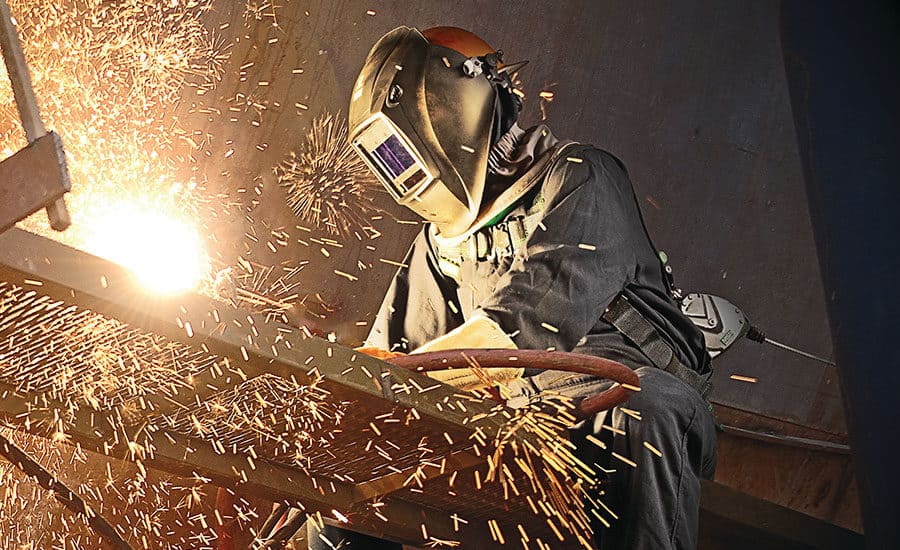
When metal melts during welding, the molten pool is chemically reactive. Atmospheric gases can enter the weld and cause porosity, weaken the joint, or create a rough bead that requires additional finishing work. Shielding gas displaces the surrounding atmosphere and keeps the weld pool protected from the moment the arc strikes until the metal solidifies.
Beyond protection, the gas composition directly influences arc behavior. Different gases conduct heat and ionize at different rates, which changes how the arc feels, how stable it runs, and how the filler metal transfers into the joint. Getting that behavior right for the application produces cleaner welds with less spatter and less post-weld work.
MIG Welding and Gas Selection
For MIG welding on mild steel, the most widely used blend is 75% argon and 25% CO2. This combination delivers stable arc performance, good penetration, and a clean bead with minimal spatter. It is a reliable starting point for general fabrication work and suits a wide range of material thicknesses.
Pure CO2 is a lower-cost option that provides deeper penetration, which makes it useful for thicker steel. The tradeoff is a less stable arc and more spatter, which adds cleanup time. For shops running high volume on thicker plate, that tradeoff can make sense. For applications where bead appearance matters, an argon-based blend is the better choice.
When welding stainless steel with MIG, a tri-mix of argon, CO2, and helium is common. The helium adds heat input and improves fluidity in the weld pool, which helps produce a cleaner finished bead on stainless without compromising the material’s corrosion resistance.
TIG Welding and Gas Selection
TIG welding relies almost exclusively on argon as the primary shielding gas. Argon produces a stable, controllable arc and delivers excellent results across steel, stainless, and aluminum. Its density relative to air means it blankets the weld pool effectively at lower flow rates than lighter gases require.
For thicker materials or applications where heat input and travel speed matter, adding helium to the argon increases arc energy and penetration. Helium costs more and requires higher flow rates, so it tends to be reserved for specific applications where its performance characteristics justify the added expense.
On stainless steel TIG work, small additions of hydrogen to an argon base can improve bead appearance and reduce oxidation on the surface. This blend requires careful handling and is better suited to experienced operators working in controlled conditions.
Matching the Gas to the Job
The right shielding gas is determined by the base material, the welding process, the position, and the finish requirements of the application. A gas that works well for structural fabrication on mild steel may perform poorly on thin-gauge stainless or aluminum. Taking time to select the right blend for each application produces better welds, reduces rework, and gets more out of every hour on the floor.
Through nexAir KnowHow™, our team has helped welding operations dial in their gas selection for the specific materials and processes they run every day. Reach out to your local branch and Forge Forward with the right gas behind every weld.
Looking out for your future
Get your career going on the right track with nexAir
Find out how nexAir KnowHow has impacted businesses all over the Southeast
Our expertise makes us more than a valuable partner, it makes us headlines

Don't see what you're looking for?
Everything we offer is a click away and it will arrive before you know it.