Improving Energy Efficiency with Modern Gas Supply Systems
Every stage of a gas supply system consumes energy, from maintaining cryogenic storage temperatures to pushing gas through distribution lines at the right pressure. Modern supply systems are designed to minimize that draw at each stage, and a well-configured program compounds those savings across the full chain from source to process.
Picking the Right Supply Method
Liquid cryogenic storage keeps gas cold around the clock, which means it pulls energy whether a production line is running or sitting idle. PSA generators work differently. They pull nitrogen or oxygen straight from the air and only run when the process needs gas, shutting down automatically during downtime.
For facilities that run variable schedules or have long off-shifts, that difference is significant. A generator sized to actual demand spends far less time consuming power than a cryogenic tank maintaining temperature through a weekend. High-volume nitrogen and oxygen applications at standard purity are strong candidates for on-site generation, while specialty gases and high-purity applications typically still favor delivered supply. Matching the supply method to actual usage patterns is where a lot of efficiency gets recovered.
Pressure and Pipe Sizing
Delivering gas at higher pressure than a process needs wastes the energy used to get it there. Two-stage regulation steps pressure down gradually, which keeps each stage working efficiently and delivers a steadier output at the right pressure for the application. Single-stage regulators that handle the full pressure drop in one step work harder and wear faster, and the instability they introduce downstream can affect process consistency as well as energy use.
Pipe diameter through the distribution run matters just as much. A line that’s too narrow for the flow it carries forces the system to push harder, which drives up pressure drop and compressor load. Getting the sizing right from the start keeps everything running at the pressure and flow rate it was designed for, without burning extra energy to compensate for an undersized system.
The Real Cost of Leaks
A leaking fitting loses product continuously, and that product carries all the energy spent making it, compressing it, and getting it to the facility. Several small leaks running at once can add up to a significant volume of wasted gas over a month. Routine leak detection turns that loss into a recoverable one rather than a fixed cost built into the operating budget.
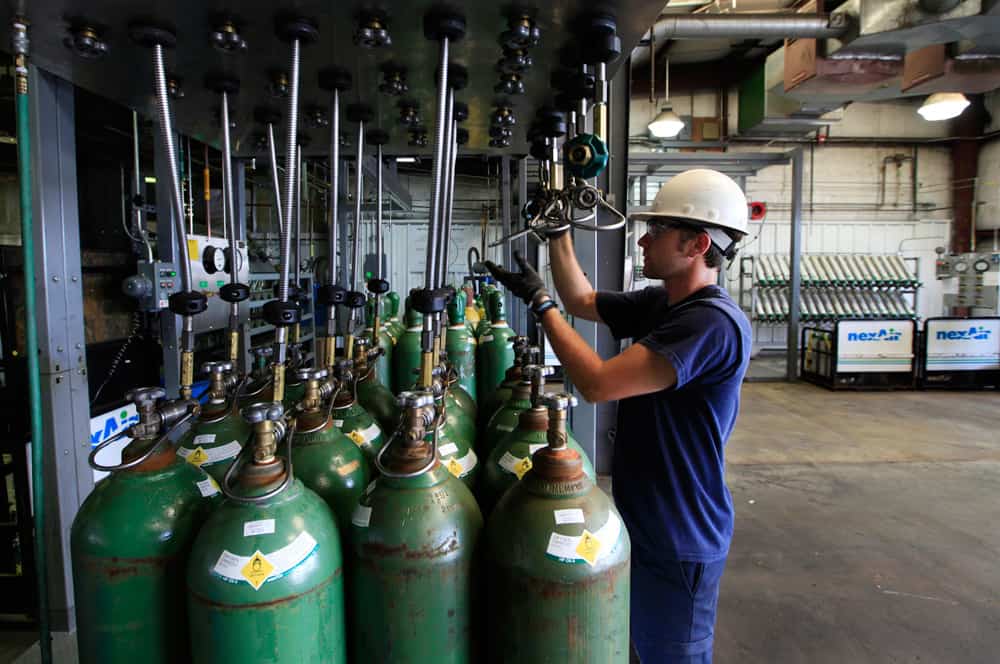
Manifold systems help by consolidating connections across the facility. Fewer fittings mean fewer places for leaks to develop and less ground to cover during inspection. For high-consumption operations cycling through large cylinder inventories, the connection reduction from a centralized manifold is substantial.
Telemetry and Smarter Deliveries
Remote tank monitoring ties into efficiency at the delivery level. Scheduling bulk refills based on real consumption data consolidates truck runs and cuts the number of annual deliveries, which reduces the fuel burned getting gas to the facility in the first place.
On the production floor, live consumption data shows when a process is pulling more gas than it should. That can point to equipment running out of spec or a process parameter that has drifted, and catching it early keeps energy use where it belongs rather than letting it climb unnoticed across a production month.
Forge Forward with nexAir
nexAir has the KnowHow™ to help customers build gas supply programs that run efficiently from source to process. Talk to your local nexAir team about where your system can perform better and Forge Forward with a supply setup built around real efficiency.
Looking out for your future
Get your career going on the right track with nexAir
Find out how nexAir KnowHow has impacted businesses all over the Southeast
Our expertise makes us more than a valuable partner, it makes us headlines

Don't see what you're looking for?
Everything we offer is a click away and it will arrive before you know it.