Medical vs Industrial Gas: Key Differences Explained
A tank of industrial oxygen contains the same O2 molecules as medical oxygen. The difference lies in purity standards, contamination controls, production processes, regulatory oversight, and documentation requirements. These distinctions matter because medical gases enter human bodies where trace contaminants that industrial processes tolerate can cause serious harm.
Purity Standards and Contamination Limits Differ Dramatically
Industrial oxygen typically meets purity levels around 99.5%, which works fine for cutting torches, wastewater treatment, or steel production. The remaining half-percent might contain trace nitrogen, argon, water vapor, or other gases that don’t affect industrial processes. Medical oxygen must meet USP (United States Pharmacopeia) standards requiring 99% minimum purity with strict limits on specific contaminants that could harm patients.
The real difference shows up in what contaminants are monitored and controlled. Medical gas production tracks carbon monoxide, carbon dioxide, gaseous and particulate matter at levels measured in parts per million. Industrial gas production might not test for some of these contaminants at all because they don’t matter for cutting metal or treating wastewater. A few parts per million of carbon monoxide that’s irrelevant to industrial users could be deadly to a patient on respiratory support.
Water vapor content receives particular attention in medical gases. Excessive moisture can support bacterial growth in delivery systems or form ice crystals in cryogenic equipment. Medical gas cylinders undergo rigorous drying procedures and testing to verify moisture content stays below specified limits. Industrial cylinders may contain higher moisture levels that cause no problems in their intended applications.
Production and Handling Requirements Operate Under Different Rules
Medical gas production facilities operate under FDA oversight as pharmaceutical manufacturing operations. They follow current Good Manufacturing Practices (cGMP) with documented procedures for every step, employee training requirements, environmental controls, and quality testing protocols. Industrial gas plants follow industry standards and safety regulations but don’t face the same pharmaceutical-grade manufacturing requirements.
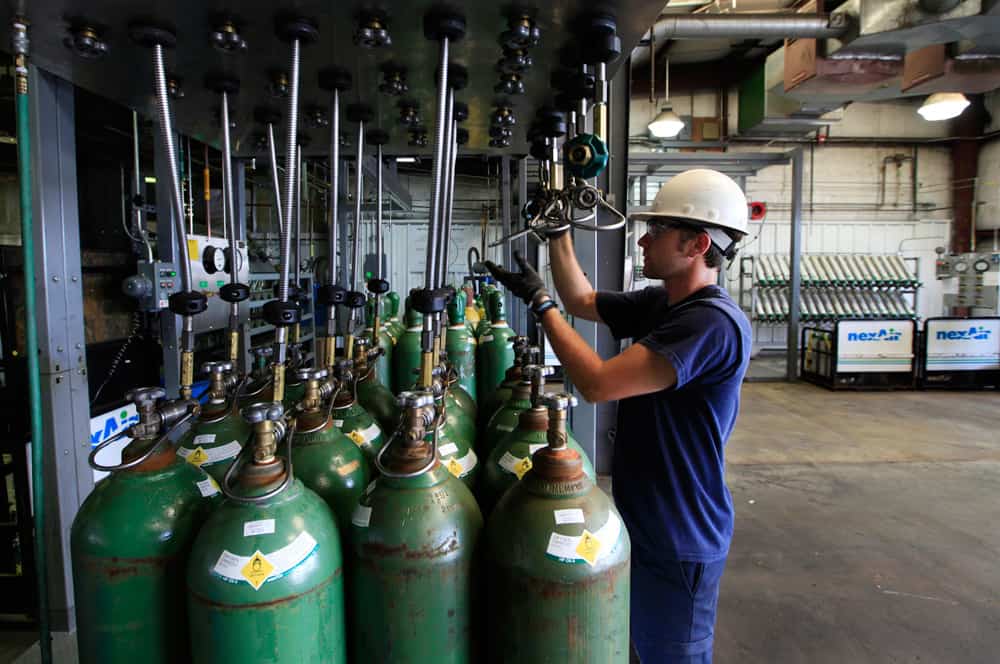
Cylinders and equipment that contact medical gases require different cleaning and maintenance procedures. Medical gas cylinders get dedicated to medical service and can’t be used interchangeably with industrial applications. The cleaning process removes oils, particulates, and residues using validated procedures with documented results. Working with suppliers who understand these distinctions, nexAir’s KnowHow™ helps healthcare facilities maintain compliant gas supply systems.
Labeling and color coding follow strict standards for medical gases. The label must include lot numbers, expiration dates, and specific warnings. Cylinder colors in the United States follow a system where green indicates oxygen, though international standards vary. These markings prevent dangerous mix-ups in healthcare settings where multiple gas types are used simultaneously.
Documentation and Traceability Create Audit Trails
Every medical gas cylinder comes with a Certificate of Analysis documenting the specific batch’s purity test results. This paperwork includes gas composition, contaminant levels, test methods used, and the date of analysis. Healthcare facilities must maintain these records to demonstrate compliance during inspections and to support investigations if patient care issues arise.
Traceability extends through the entire supply chain. If a quality issue surfaces, medical gas suppliers must be able to identify every cylinder from an affected production lot and notify customers immediately. This tracking system allows rapid response to potential problems before they affect patient care. Industrial gas suppliers maintain basic lot tracking but rarely face the same detailed traceability requirements.
Regulatory inspections examine medical gas supply systems with scrutiny that industrial applications never encounter. State pharmacy boards, Joint Commission surveyors, and FDA inspectors all have authority to review gas supply documentation, storage conditions, and handling procedures. Facilities must demonstrate continuous compliance with standards that go well beyond what industrial gas users face, helping healthcare operations Forge Forward with gas supply systems that meet both patient care needs and regulatory requirements.
Looking out for your future
Get your career going on the right track with nexAir
Find out how nexAir KnowHow has impacted businesses all over the Southeast
Our expertise makes us more than a valuable partner, it makes us headlines

Don't see what you're looking for?
Everything we offer is a click away and it will arrive before you know it.