nexAir’s Guide to Diving Gas Supply: From Basic Air to Advanced Nitrox Solutions
Breathing gas choices for diving have expanded dramatically over the past few decades. What once meant simply compressed air now includes a range of gas mixtures designed for specific diving applications, depths, and objectives. Understanding these options helps divers make informed decisions about which breathing gases best support their diving goals while maintaining appropriate safety margins.
The progression from air to nitrox to more advanced mixtures follows diving’s evolution from basic recreational activities to sophisticated technical pursuits. Each gas type serves specific purposes and offers distinct advantages under the right circumstances.
Compressed Air: The Foundation
Standard compressed air remains the most common breathing gas for recreational diving. Containing approximately 21% oxygen and 79% nitrogen, compressed air works well for most recreational diving activities within depth limits of 100-130 feet, depending on certification level and dive planning considerations.
Air’s widespread availability and lower cost make it practical for basic diving activities. Most dive shops routinely fill tanks with compressed air, and the majority of recreational dive training programs use air as the primary breathing gas. The nitrogen content in air does create limitations at deeper depths due to nitrogen narcosis effects, but within recreational depth ranges, compressed air provides safe, reliable breathing gas for underwater exploration.
Nitrox: Extended Bottom Time
Nitrox breathing gases contain higher oxygen percentages than standard air, typically ranging from 22% to 40% oxygen content. These enriched air mixtures offer several advantages for recreational diving, primarily extended bottom times and reduced nitrogen loading for repetitive dive situations.
Common nitrox mixtures include EAN32 (32% oxygen) and EAN36 (36% oxygen), though custom blends can be created for specific dive profiles. The higher oxygen content reduces nitrogen absorption, allowing longer no-decompression dive times at given depths. This proves particularly valuable for underwater photographers, marine biologists, and recreational divers who want to maximize their underwater exploration time. However, nitrox diving requires additional training and certification to understand oxygen toxicity limits and maximum operating depths for different mixtures.
Technical Gas Mixtures
Trimix combines helium, oxygen, and nitrogen to create breathing gases suitable for deep diving while minimizing nitrogen narcosis and oxygen toxicity concerns. High-oxygen nitrox mixtures serve as decompression gases during ascent phases of technical dives. These advanced mixtures require specialized training, careful dive planning, and precise gas management techniques. Our technical KnowHow™ in advanced gas mixing ensures these specialized breathing gases meet the exacting standards that technical diving applications demand.
Gas Purity and Quality Standards
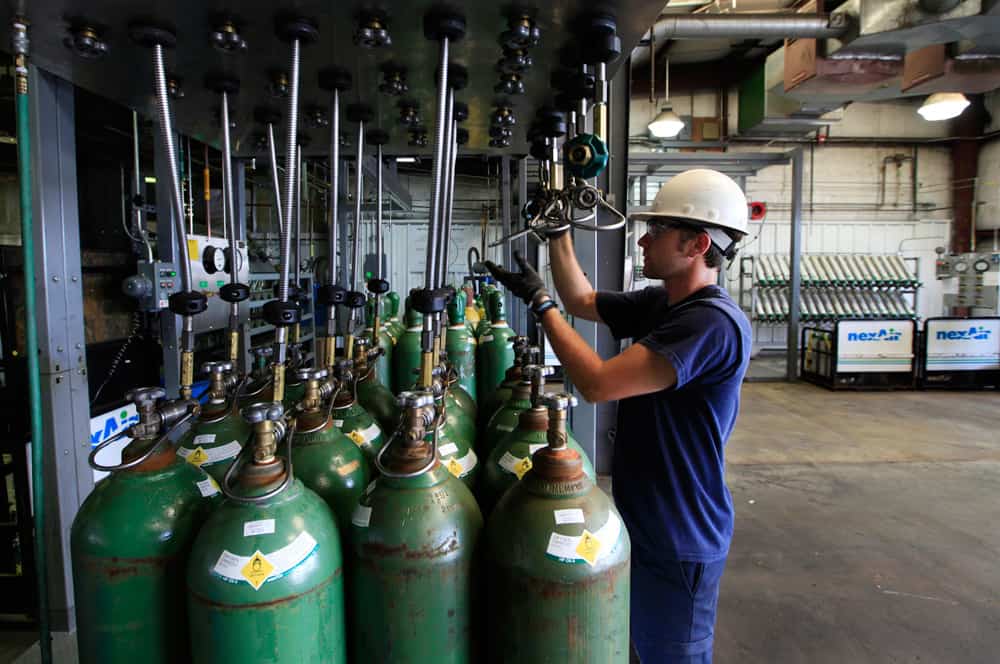
All diving breathing gases must meet strict purity standards regardless of their oxygen content. Moisture levels, carbon monoxide content, oil contamination, and other impurities can create serious health risks underwater. Breathing gas production involves specialized filtration, purification, and testing procedures to ensure each tank meets diving safety standards.
Quality control processes include comprehensive testing for contaminants, moisture analysis, and oxygen percentage verification. Documentation accompanies each gas mixture, providing divers with precise composition data needed for accurate dive planning and gas management. These quality assurance measures help diving operations Forge Forward with confidence, knowing their breathing gas supply meets the rigorous standards that underwater safety requires.
Planning Your Gas Supply
nexAir provides breathing gas solutions spanning the full range from basic compressed air through advanced technical mixtures. Our gas production capabilities support both recreational diving activities and sophisticated technical diving pursuits with the quality standards and documentation that safe diving practices require.
Contact our diving gas specialists to discuss your specific breathing gas requirements and learn about the gas mixtures available for your diving activities. We can help you understand which options best match your certification level, diving objectives, and planned dive profiles.
Looking out for your future
Get your career going on the right track with nexAir
Find out how nexAir KnowHow has impacted businesses all over the Southeast
Our expertise makes us more than a valuable partner, it makes us headlines

Don't see what you're looking for?
Everything we offer is a click away and it will arrive before you know it.