Key Welding Processes Used in Industrial Fabrication
Industrial fabrication covers an enormous range of materials, joint types, and quality requirements. No single welding process handles all of it well. The processes that dominate shop floors and field work each bring something different to the job, and selecting the right one affects weld quality, deposition rate, post-weld cleanup, and ultimately how much your operation spends per foot of completed weld. Here’s a breakdown of the four most widely used processes and where each one earns its place.
MIG Welding
MIG welding, or Gas Metal Arc Welding (GMAW), feeds a continuous solid wire electrode through the gun while a shielding gas protects the weld pool from atmospheric contamination. The wire acts as both electrode and filler, which keeps the process fast and relatively easy to run consistently. Deposition rates are high, slag removal isn’t required, and the welds come out clean enough that post-weld finishing stays minimal.
For high-volume shop fabrication involving mild steel, MIG is the standard. Tanks, ductwork, structural platforms, and general assemblies all fit cleanly in its wheelhouse. The process needs clean base metal and a controlled environment, so wind and surface contamination can create problems outdoors. A 75/25 argon/CO2 blend is the go-to shielding gas for mild steel, balancing arc stability and spatter control without sacrificing penetration.
TIG Welding
TIG welding, or Gas Tungsten Arc Welding (GTAW), uses a non-consumable tungsten electrode to generate the arc while the welder feeds filler rod manually into the weld pool. Pure argon shielding gas protects the puddle. The process is slower than MIG and demands more skill, but it produces cleaner, more precise welds with deeper penetration control and no slag.
TIG is the process of choice when quality and appearance take priority over speed. Stainless steel pipe, food-grade vessels, aerospace components, and thin-wall tubing all benefit from TIG’s level of control. When the weld will be visible or subject to strict inspection, or when the base material won’t tolerate heat distortion, TIG is where fabricators turn.
Stick Welding
Stick welding, or Shielded Metal Arc Welding (SMAW), uses a flux-coated consumable electrode that provides both the filler metal and the shielding as it burns. There’s no gas cylinder, no wire feeder, and minimal equipment to haul. That simplicity makes it highly portable and tolerant of conditions that would compromise a gas-shielded process.
Rust, mill scale, and surface contamination that would cause problems for MIG or TIG don’t stop a stick welder. The process handles thick material well and works reliably outdoors in wind and variable conditions. It’s a standard choice for pipeline repair, structural steel in the field, and heavy equipment maintenance where setup speed matters more than cosmetic finish.
Flux-Cored Arc Welding
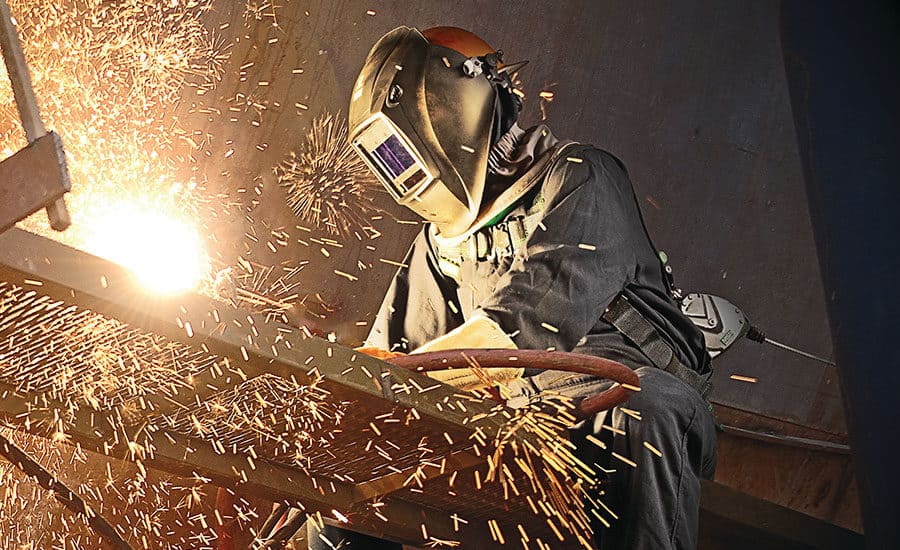
Flux-cored arc welding (FCAW) uses a wire-fed process similar to MIG, but the wire is tubular and filled with flux that generates its own shielding as it burns. Some variants also use an external shielding gas for additional protection. The result is a process that combines the productivity of wire feeding with the outdoor tolerance of a flux-shielded process.
FCAW puts down more filler metal per pass than most other processes, which makes it well suited for heavy structural fabrication, shipbuilding, and thick plate work where deposition rate directly affects productivity. The tradeoff is slag removal between passes and more post-weld cleanup than MIG. For jobs where speed and deposition volume matter more than a clean bead appearance, it’s a strong performer.
Matching Process to Application
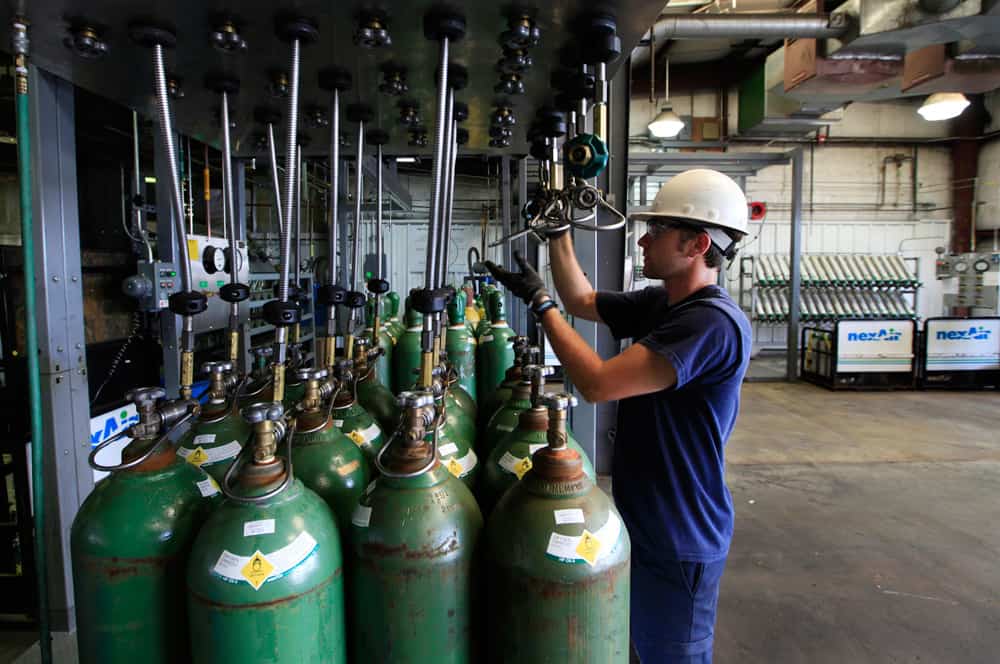
Each of these processes relies on the right gas selection and supply to perform at its best. MIG and TIG both depend on shielding gas composition and consistent delivery pressure. FCAW dual-shield variants need reliable gas supply as well. Through nexAir KnowHow™, our team helps fabricators dial in the right gas setup for each process so the weld performance matches what the job demands.
When you’re ready to talk through your welding gas supply, connect with your local nexAir branch and let’s help you Forge Forward with the right setup behind every process.
Looking out for your future
Get your career going on the right track with nexAir
Find out how nexAir KnowHow has impacted businesses all over the Southeast
Our expertise makes us more than a valuable partner, it makes us headlines

Don't see what you're looking for?
Everything we offer is a click away and it will arrive before you know it.