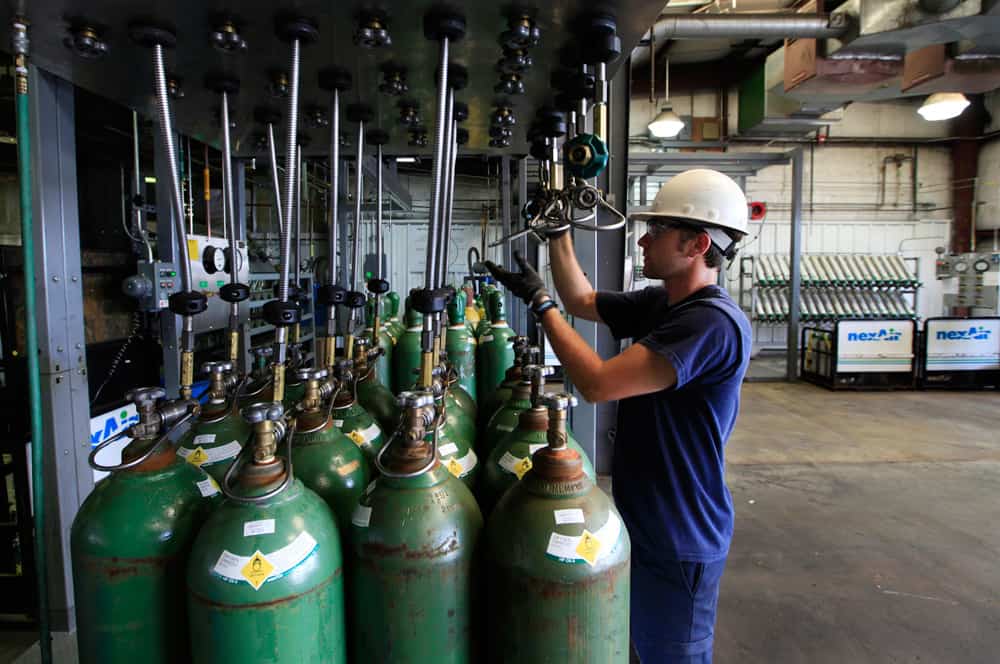
The Importance of Reliable Medical Gas Supply in Healthcare Facilities
Medical gases are classified as drugs under federal law, which reflects how seriously the healthcare industry treats their management. Oxygen supports ventilators and respiratory therapy. Medical air drives pneumatic equipment and supports patients who can’t tolerate high-concentration oxygen. Nitrous oxide serves surgical and procedural settings where consistent delivery pressure directly affects patient comfort. These systems run continuously, and the facilities that depend on them need a supply chain that keeps pace.
How Medical Gas Systems Are Structured
Most healthcare facilities deliver medical gases through a centralized pipeline system that connects a primary supply source to outlets throughout the building. An automatic manifold monitors pressure and switches to a backup source when the primary runs low, keeping flow uninterrupted during normal operations and planned maintenance. Backup supply configurations are required under NFPA 99, the Health Care Facilities Code that governs medical gas system design, installation, and maintenance across North American healthcare facilities.
The code uses a risk-based approach that categorizes systems according to how a failure would affect patient care. Daily checks on alarms and manifold supply levels, annual inspections of central supply systems, and quarterly maintenance on key components are all part of staying compliant. Only certified personnel are authorized to work on these systems, and documentation of every maintenance activity is required.
Why Medical Grade Matters
Medical-grade gases are not interchangeable with industrial-grade gases, even when the base chemistry looks similar. Medical oxygen must meet United States Pharmacopeia purity standards and be produced, stored, and transported under conditions that prevent contamination at every step. The same applies across all gases used in clinical settings.
Each gas type comes with its own purity requirements and cylinder specifications. Non-interchangeable outlet connections throughout the pipeline are designed to prevent cross-connections at the point of use, but the integrity of the supply starts well before the gas reaches the wall outlet. Sourcing from a supplier who understands medical-grade requirements and maintains the documentation to support them is how facilities protect both patients and their compliance records.
Compliance and the Role of Documentation
The Joint Commission evaluates medical gas systems during accreditation surveys, looking at NFPA compliance, staff training records, and emergency preparedness. CMS has adopted a minimum edition of NFPA 99 as a condition for facilities receiving Medicare and Medicaid payments, which makes compliance mandatory for most hospitals and healthcare organizations.
Keeping those records current requires more than good intentions. Cylinder rotation logs, delivery records, certificates of analysis, and maintenance documentation all need to be accurate and accessible. When a survey happens, the paper trail is what demonstrates that the system has been managed correctly, not just that it’s working at the moment of inspection.
Staying Ahead of Supply
Annual reviews of bulk oxygen system capacity are required to confirm the system is sized correctly for current patient volume and demand. Facilities that let cylinder inventory run thin or defer maintenance on backup systems create gaps that redundancy is designed to prevent. Supply planning, expiration tracking, and coordination with a knowledgeable supplier are what keep those gaps from opening up.
Through nexAir KnowHow™, our team works alongside healthcare facility managers to keep medical gas supply consistent, compliant, and properly documented. We bring the experience these systems require, from sourcing certified medical-grade gases to supporting inventory planning and emergency preparedness.
Reach out to your local nexAir branch and let’s build a medical gas program that lets you Forge Forward with confidence in the supply behind every patient interaction.
Looking out for your future
Get your career going on the right track with nexAir
Find out how nexAir KnowHow has impacted businesses all over the Southeast
Our expertise makes us more than a valuable partner, it makes us headlines

Don't see what you're looking for?
Everything we offer is a click away and it will arrive before you know it.