Why nitrogen is a game-changer in plastics production: nexAir’s solutions for better molded products
Nitrogen has quietly revolutionized plastics manufacturing over the past couple decades. What used to require expensive chemical additives or painfully slow processing speeds now gets handled with simple gas applications. The change has been dramatic – manufacturers produce better-looking parts faster while using less material and generating less scrap.
Stopping Problems That Used to Be Inevitable
Hot plastic and oxygen don’t get along. Leave them together and the plastic degrades, discolors, and weakens. For years, manufacturers just accepted this as part of the process and built workarounds – adding stabilizers to the resin, running slower cycles to minimize exposure, or planning for higher scrap rates on light-colored products. Nitrogen flipped that approach by removing oxygen from the environment entirely. No oxygen means no oxidation reactions, which means white plastic stays white and clear plastic stays clear.
Creating Products That Weren’t Possible Before
Gas-assist molding injects nitrogen directly into the molten plastic inside the mold, creating hollow sections and pushing material into areas that would be impossible to fill otherwise. This opened up design possibilities that didn’t exist with traditional molding. Thick handles can be made lighter and use less plastic. Complex shapes that used to require multiple pieces and assembly can now be molded as single parts.
Manufacturers use this for everything from automotive grab handles to furniture components to large appliance housings. The parts are lighter, use less material, and often perform better than solid equivalents because the hollow sections add structural rigidity in specific directions.
Getting Surfaces Right the First Time
Sink marks and surface imperfections used to be accepted flaws on thick-walled molded parts. Gas dissolved in the plastic would escape during cooling, leaving voids or surface defects that required grinding, filling, or just accepting as cosmetic issues. Counter-pressure molding with nitrogen solved this by keeping the gas dissolved where it belongs.
Parts that used to need secondary finishing operations now come out of the mold ready to use. That’s less labor, less material waste from sanding and filling, and faster turnaround from molding to finished product. The surface quality improvement also means parts look better, which matters when appearance is part of the product spec.
Finding What Works for Your Operation
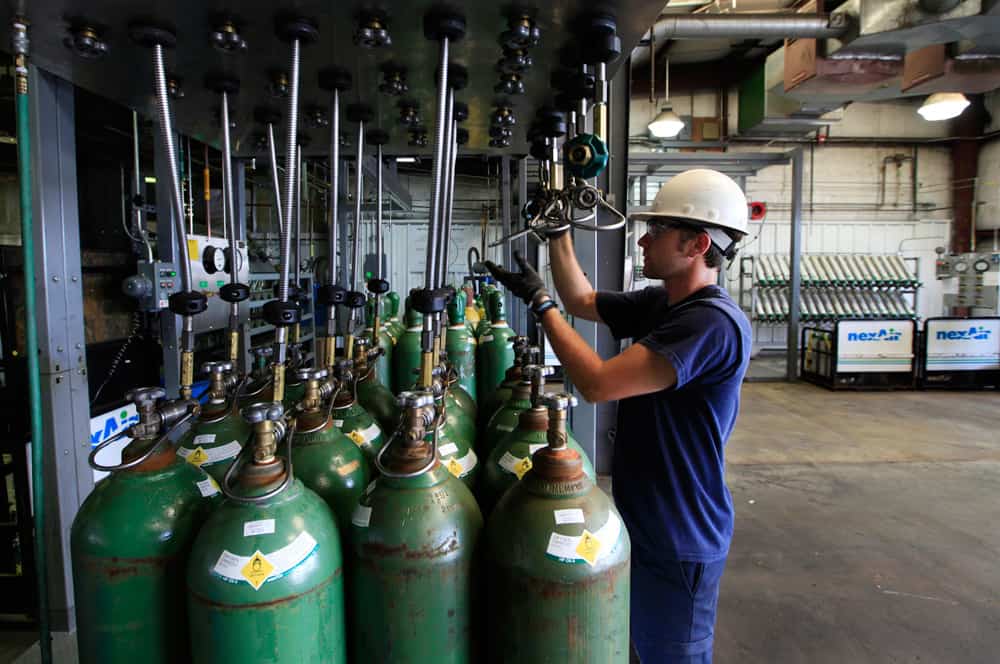
Nitrogen setups vary based on production volume, available space, and how the gas gets used. High-volume facilities often install bulk storage that gets refilled on schedule. Smaller operations might use cylinder delivery or microbulk systems that split the difference. The right answer depends on actual consumption patterns and how your facility operates.
We’ve worked with enough plastics manufacturers to recognize patterns in what works for different situations. Our expert KnowHow™ helps match nitrogen delivery systems to real production needs rather than defaulting to standard solutions that don’t quite fit. We help you Forge Forward by setting up gas supply that supports better molding without creating new complications.
Interested in what nitrogen could do for your molding operation? Contact nexAir and we’ll talk through your production setup and where nitrogen applications might make sense.
Looking out for your future
Get your career going on the right track with nexAir
Find out how nexAir KnowHow has impacted businesses all over the Southeast
Our expertise makes us more than a valuable partner, it makes us headlines

Don't see what you're looking for?
Everything we offer is a click away and it will arrive before you know it.