
• nexAir Now
  • C2H2

    Acetylene (C2H2) Gas Supplier

    AVAILABLE IN
    CYLINDER
    GAS

    Acetylene Gas for Oxy-Fuel Cutting, Brazing & Industrial Applications

    Acetylene is a high-temperature industrial fuel gas commonly used for oxy-fuel cutting, brazing, soldering, flame heating, and portable metal fabrication applications. Because acetylene produces one of the hottest fuel gas flames available, it is widely used across welding, HVAC, construction, manufacturing, demolition, and maintenance industries.

    Acetylene Gas Delivery and Retail Locations

    nexAir supplies acetylene cylinders, cylinder exchange services, welding gases, regulators, and oxy-fuel equipment for contractors, fabricators, maintenance departments, and industrial operations throughout the Southeast.  Contact us for delivery option or visit one of our 65+ retail locations.

    Whether your operation requires portable field cutting, HVAC brazing capability, or precision metalworking support, nexAir can help identify the right acetylene supply solution for your application.  Contact us for delivery option or visit one of our 65+ retail locations.

    Common Uses for Acetylene Gas

    Acetylene is primarily used with oxygen in oxy-acetylene systems for:

    • Oxy-fuel cutting
    • Brazing refrigerant lines
    • Portable welding applications
    • Flame heating
    • Pipe cutting
    • Demolition work
    • Equipment repair
    • Farm maintenance
    • Steel fabrication
    • Soldering and metal joining

    Acetylene remains one of the preferred fuel gases for applications requiring portability, concentrated heat, and precision flame control.


    Acetylene Safety & Handling Guidelines

    Because acetylene is a highly flammable fuel gas, proper handling procedures are essential.

    Important Safety Recommendations

    • Store cylinders upright at all times
    • Never use acetylene above 15 PSI
    • Use compatible acetylene regulators only
    • Install flashback arrestors
    • Secure cylinders during transport
    • Keep away from ignition sources
    • Follow OSHA and CGA guidelines
    • Wear proper PPE during torch operations

    nexAir can assist customers with compatible regulators, flashback arrestors, torch equipment, PPE, and cylinder handling accessories.

    Learn More

    Where To Find Acetylene Gas Near You

    nexAir supplies acetylene gas cylinders, welding gases, and oxy-fuel equipment through branch locations across the Southeast. Contact your local nexAir location for cylinder availability, delivery options, welding supplies, and gas exchange services.

    The updated acetylene content aligns with how industrial buyers search operationally rather than just by product name. It also creates strong semantic relationships between welding gases, HVAC applications, safety procedures, and equipment categories.
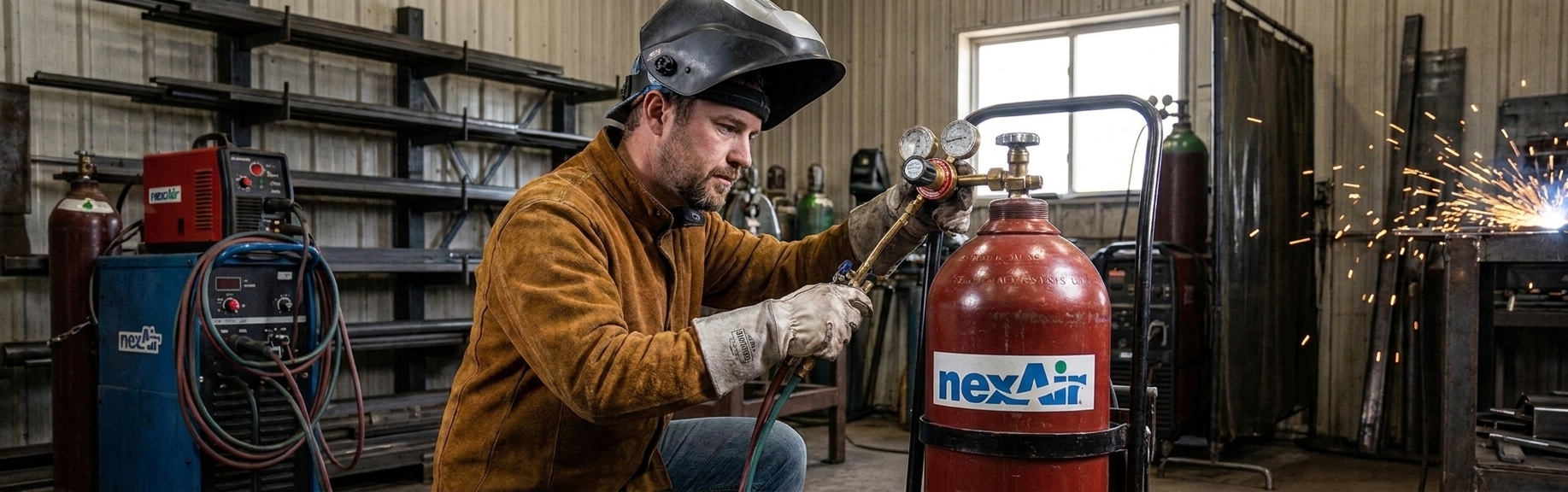
    Acetylene Gas Delivery

    Frequently Asked Questions About Acetylene Gas

    K
    L
    What is acetylene used for?

    Acetylene is commonly used for oxy-fuel cutting, brazing, soldering, flame heating, and portable welding applications.

    K
    L
    Is acetylene hotter than propane?

    Yes. Acetylene produces a hotter flame than propane when combined with oxygen.

    K
    L
    Can acetylene be used for HVAC brazing?

    Yes. Acetylene is widely used for brazing copper refrigerant lines in HVAC and refrigeration work.

    K
    L
    What industries use acetylene?

    Industries include welding, HVAC, construction, demolition, manufacturing, maintenance, and agriculture.

    K
    L
    How should acetylene cylinders be stored?

    Acetylene cylinders should always be stored upright in ventilated areas away from heat and ignition sources.

    K
    L
    What pressure should acetylene be used at?

    Acetylene should never be used above 15 PSI.

    K
    L
    Does nexAir provide acetylene cylinder refills?

    Yes. nexAir offers acetylene cylinder exchange and refill programs through local branches across the Southeast.

    K
    L
    How do I choose a reliable acetylene gas supplier?

    When selecting an acetylene gas supplier, look beyond price and evaluate the supplier's safety standards, product quality, delivery capabilities, and technical expertise. A reliable supplier should provide properly maintained cylinders, consistent gas purity, regulatory compliance, and dependable delivery schedules to help prevent costly downtime. Suppliers that offer technical support, cylinder tracking, inventory management, and safety training can provide additional value for welding, metal fabrication, manufacturing, and industrial operations. nexAir emphasizes industry expertise, dependable supply, and customer support as key factors in helping customers select the right gas solutions for their applications.

    For more information, see the nexAir acetylene resource page: nexAir Acetylene

    K
    L
    How is acetylene gas produced?

    Acetylene (C₂H₂) is typically produced through one of two primary methods. The traditional process involves reacting calcium carbide with water, which generates acetylene gas and calcium hydroxide. A second industrial method uses thermal cracking of hydrocarbons at very high temperatures to produce acetylene and other chemical feedstocks. Once produced, acetylene is specially packaged because it becomes unstable under pressure. To improve safety, the gas is dissolved in acetone and stored within cylinders containing a porous filler material. This design allows acetylene to be transported and used safely in industrial applications such as welding and cutting.

    K
    L
    What is the cost of acetylene gas from suppliers?

    The cost of acetylene gas varies depending on several factors, including cylinder size, gas volume, geographic location, delivery requirements, and whether the cylinder is rented, leased, exchanged, or customer-owned. Additional costs may include cylinder rental fees, hazmat charges, delivery fees, and refill or exchange services. Because pricing can fluctuate based on market conditions and local supply, most industrial gas suppliers provide custom quotes rather than publishing fixed pricing. Businesses with ongoing gas requirements may also qualify for volume discounts or supply agreements. Contacting a local supplier is the best way to obtain current pricing for your specific application.

    K
    L
    What are the regulations regarding acetylene gas supply?

    Acetylene is regulated by multiple federal and industry standards because it is an extremely flammable gas that can become unstable under certain conditions. In the United States, transportation and cylinder requirements are governed by the U.S. Department of Transportation (DOT), including regulations covering cylinder construction, filling limits, inspection procedures, and transportation requirements. Acetylene cylinders must contain a porous filler material and a suitable solvent, typically acetone, and are subject to specific pressure limitations and safety testing requirements. Employers handling acetylene must also comply with applicable OSHA safety standards, while suppliers must follow industry standards established by organizations such as the Compressed Gas Association (CGA)

    K
    L
    What certifications should I look for in an acetylene gas supplier?

    When selecting an acetylene supplier, you should look for companies that follow recognized industrial gas and safety standards and demonstrate formal quality control systems.

    A reliable supplier will typically operate under ISO/IEC 17025-accredited testing and calibration standards for gas quality and consistency, ensuring cylinders are filled and verified using controlled laboratory processes . This level of accreditation indicates that the supplier follows strict procedures for accuracy, traceability, and repeatable gas quality—especially important for industrial and welding applications.

    In addition, you should look for suppliers that comply with DOT (Department of Transportation) cylinder specifications and follow CGA (Compressed Gas Association) guidelines for acetylene handling, storage, and transport. These standards ensure cylinders are properly designed for acetylene’s unique dissolved-gas storage system and are safely tested for pressure limits and structural integrity.

    Finally, strong acetylene suppliers will also align with OSHA-compliant safety practices and provide documentation such as Safety Data Sheets (SDS) and cylinder traceability or certification records for quality assurance.

    K
    L
    What are the risks associated with using acetylene gas?

    Acetylene is a highly flammable industrial fuel gas with several serious safety risks that require careful handling and proper equipment.

    The primary risk is its extreme flammability and wide explosive range in air, meaning it can ignite easily and burn violently under the right conditions. It can form explosive atmospheres when mixed with oxygen or air and may even decompose explosively under certain pressure or heat conditions .

    Unlike many other fuel gases, acetylene also carries a unique hazard: it can become unstable if used or stored improperly, especially if subjected to excess pressure, heat, or shock, which can trigger decomposition inside the cylinder itself. This makes cylinder handling, storage, and transport critical safety priorities.

    Additional risks include:

    • Flashback into hoses or cylinders, which can lead to fire or explosion
    • Improper regulator pressure (must stay low, typically under 15 PSI on the working side)
    • Cylinder damage or overheating, which can cause delayed but violent failure
    • Gas leaks, which can accumulate in poorly ventilated areas and ignite from small sparks

    Because of these hazards, acetylene systems require specialized equipment such as flashback arrestors, proper regulators, and strict adherence to safety procedures during use.


    Industrial Uses for Acetylene Gas – Update

    Plastics

    Acetylene (C2H2) is utilized with other chemicals or elements like chlorine and hydrochloric acid to produce different variants of plastic like PVC and PVDF. These plastics are commonly used to fabricate several different household and commercial products.

    Universities & Scientific Research

    Acetylene (C2H2) is used to volatilize Carbon in radiocarbon dating in order to determine the age of carbon based items.

    Welding & Metal Fabrication

    This is an excellent fuel gas for use in welding steel, spot heating of metal materials, brazing, and basic cutting. It is also used for flame hardening materials, flame cleaning, texturing, as well as, thermal spraying.

    Construction

    Construction crews and demolition contractors rely on portable acetylene systems for: Structural steel cutting Pipe removal Emergency repairs Rebar cutting Onsite equipment maintenance Portable acetylene systems are especially valuable in remote or temporary jobsite environments.


    Don't see what you're looking for?

    Everything we offer is a click away and it will arrive before you know it.