Healthcare Growth Starts with Strong Infrastructure
Healthcare organizations across the Southeast are growing.
Hospitals are expanding. Outpatient facilities are opening in new communities. Surgery centers are adding procedures. Health systems are renovating existing campuses and investing in new technology.
Growth creates opportunities to serve more patients, but it also puts more pressure on the infrastructure behind patient care.
Medical gas systems are one part of that infrastructure.
As patient volumes increase and clinical services expand, healthcare organizations need to make sure medical gas supply, storage, delivery, monitoring, and supporting equipment can keep pace.
Planning those systems early helps facilities grow without creating unnecessary problems later.
Growth Changes Medical Gas Demand
A healthcare facility designed around one level of patient demand may eventually operate very differently.
Adding patient rooms increases potential medical gas usage. New operating or procedure rooms may introduce additional requirements. Laboratory expansion can increase demand for specialty and analytical gases.
Even changes that seem relatively small can affect the larger system.
That is why healthcare growth planning should include an evaluation of current and future medical gas demand.
Facilities need to understand what they use today, where they use it, and how expansion may change those requirements.
Infrastructure Should Support the Way Care Is Delivered
Medical gas requirements vary throughout a healthcare facility.
A patient room has different needs from an operating room. A laboratory may depend on specialty gases that are not used elsewhere in the building. Outpatient facilities may have completely different usage patterns from large hospitals.
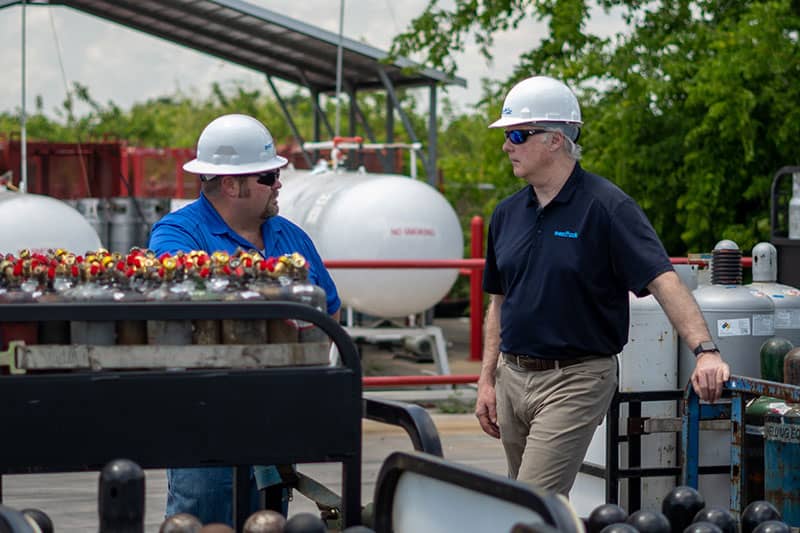
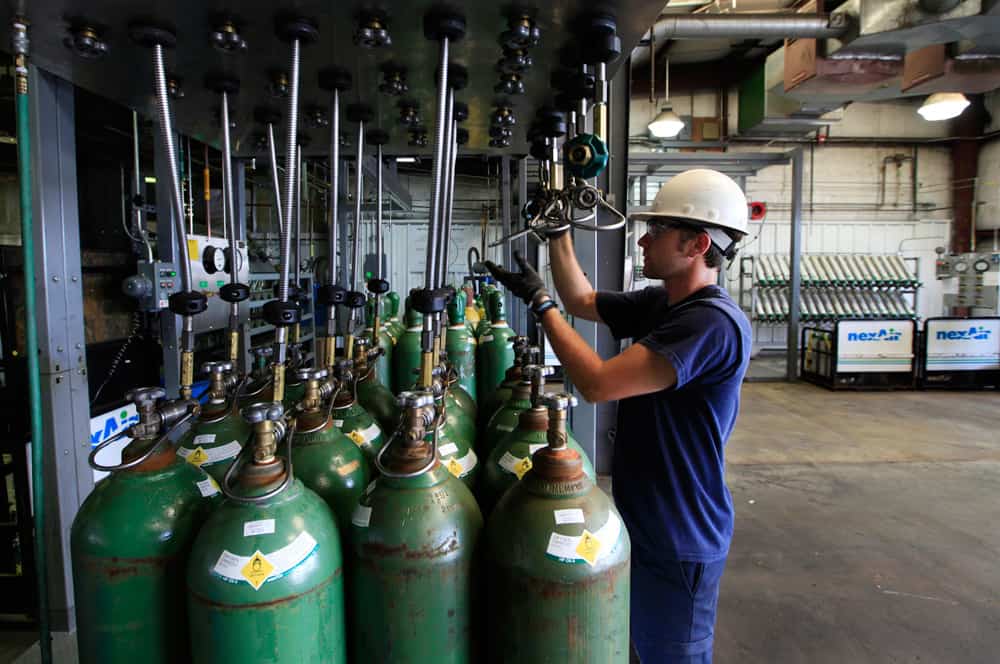
nexAir supports healthcare customers with bulk gas supply, cylinders, portable oxygen and nitrogen systems, installation, maintenance, and monitoring.
The right solution depends on the facility.
Instead of starting with a particular delivery method, planning should begin with the clinical application and expected demand.
Plan Capacity Before It Becomes a Problem
Infrastructure is easiest to improve before it reaches its limit.
Healthcare organizations planning expansions should evaluate whether existing gas systems have enough capacity to support additional demand.
That includes the primary gas supply as well as distribution, storage, reserve supply, and supporting equipment.
A system that has operated reliably for years may still need to change if the facility adds significant patient capacity or new clinical services.
Waiting until supply becomes a constraint can make the solution more disruptive and expensive.
Growth planning gives facilities an opportunity to address capacity before it affects operations.
Medical Gas Supply Requires Reliability
Medical gas supply is different from many other facility supplies.
For some applications, an interruption can directly affect clinical operations.
That makes reliability an important part of infrastructure planning.
Healthcare organizations need dependable gas quality, appropriate supply capacity, and systems designed to support continuity.
nexAir produces medical gases for hospitals, surgery centers, hyperbaric wound treatment centers, dental offices, and home healthcare customers at FDA-compliant fill plants.
For larger healthcare facilities, bulk supply can provide the capacity required for higher-volume medical gas demand, while cylinders and portable systems continue to support applications throughout the organization.
The supply strategy should reflect the way the facility actually operates.
Specialty Gases Are Part of Healthcare Growth Too
Clinical expansion does not always mean additional patient beds.
Healthcare organizations are also investing in diagnostics, laboratories, research, and specialized treatment.
Those areas can create new specialty gas requirements.
Calibration mixtures, analytical gases, medical mixtures, and high-purity gases may support equipment and processes that are very different from traditional medical oxygen applications.
nexAir’s healthcare capabilities include medical and specialty gases supported by ISO/IEC 17025:2017-accredited Specialty Gas Laboratories.
Identifying those requirements during planning helps facilities avoid trying to retrofit specialized gas infrastructure after new equipment has already arrived.
Storage Needs Can Change as Facilities Grow
More gas usage can also mean more storage requirements.
Cylinder storage should be considered whenever healthcare organizations expand departments or change the way gases are supplied.
Storage requirements depend on factors including the type and quantity of gases being stored and applicable healthcare and fire-safety requirements.
Space planning therefore needs to extend beyond treatment areas.
Facilities should consider where cylinders will be stored, how employees will access them, how empties and full cylinders will be managed, and whether the storage area continues to meet the needs of the growing operation.
Support spaces matter just as much as the spaces patients see.
Visibility Becomes More Important at Scale
Managing medical gases becomes more complicated as healthcare organizations grow.
A larger facility may have cylinders distributed across many departments. A health system may manage gas assets across several hospitals, outpatient centers, laboratories, and other locations.
Better visibility can help.
nexTrack helps customers improve visibility into cylinder assets and usage, giving healthcare teams another way to understand where resources are located.
That information can support inventory management and reduce the time employees spend trying to locate cylinders.
As an organization becomes larger, having reliable information becomes increasingly valuable.
Maintenance Has to Grow with the Infrastructure
Adding infrastructure also adds maintenance responsibilities.
Medical gas supply equipment and monitoring systems need appropriate inspection, maintenance, and service throughout their operating life.
nexAir’s healthcare capabilities include installation, maintenance, and monitoring for the medical gas systems it supports.
Planning maintenance from the beginning helps healthcare organizations protect the investment they are making in new infrastructure.
Equipment should also be installed with future service access in mind.
A system that is difficult to reach will remain difficult to maintain long after construction is complete.
Think Beyond the Current Expansion
Healthcare facilities rarely stop changing.
Today’s expansion may be followed by another renovation, a new clinical service, additional patient rooms, or a separate facility several years from now.
That makes flexibility valuable.
When possible, infrastructure planning should consider reasonable future growth rather than designing every system around today’s exact demand.
That does not mean dramatically oversizing equipment.
It means asking what the organization is likely to need next and making informed decisions about capacity and expandability.
How nexAir Helps
nexAir works with healthcare organizations throughout the Southeast to support medical gas supply and infrastructure.
Its healthcare capabilities include bulk gas systems, cylinders, portable oxygen and nitrogen systems, installation, maintenance, and monitoring.
Medical gases are produced at FDA-compliant fill plants, while specialty mixtures and analytical gases are supported by ISO/IEC 17025:2017-accredited Specialty Gas Laboratories.
Through nexAir KnowHow, customers can work with experienced professionals to evaluate medical gas requirements around the needs of the facility.
Helping Customers Forge Forward
nexAir customers Forge Forward by building healthcare infrastructure that is ready to support both today’s patients and tomorrow’s growth.
Reliable medical gas supply, appropriate capacity, better visibility, and experienced support help healthcare organizations expand while maintaining the systems clinical teams depend on.
Strong Growth Needs a Strong Foundation
Healthcare growth is exciting, but new buildings and clinical programs depend on infrastructure working behind the scenes.
Medical gas systems are part of that foundation.
When healthcare organizations plan capacity, supply, storage, specialty gases, monitoring, and maintenance early, they create infrastructure that can grow alongside the care they provide.


Don't see what you're looking for?
Everything we offer is a click away and it will arrive before you know it.