Building Resilient Healthcare Facilities
Healthcare facilities have to be ready for the unexpected.
Patient volumes change. Equipment needs service. Severe weather affects transportation and utilities. Supply requirements increase with little warning. Construction projects temporarily change how departments operate.
Through all of it, patient care continues.
That is why resilience matters in healthcare infrastructure.
A resilient facility is designed to maintain critical operations when normal conditions change. Medical gas supply is one part of that planning, alongside power, water, communications, HVAC, emergency systems, staffing, and other essential resources.
Building resilience means understanding what the facility depends on and creating systems capable of supporting those needs when conditions are less than ideal.
Start with Critical Clinical Needs
Resilience planning should begin with the services that cannot easily stop.
Which departments depend on medical gases? How much do they use? What happens if demand increases suddenly? What reserve supply is available?
Different healthcare environments will have different answers.
Hospitals, surgery centers, laboratories, dental offices, and other healthcare operations use gases differently.
Understanding those applications helps facilities determine which parts of the gas supply system require the greatest attention.
The goal is to identify critical dependencies before they become critical problems.
Medical Gas Supply Needs a Continuity Strategy
Reliable supply is essential when gases support patient care.
Healthcare organizations should understand how their primary supply works and what happens when that supply requires replenishment, maintenance, or service.
Reserve supply and appropriate system capacity can provide additional protection for critical applications.
The exact strategy depends on facility size, consumption, clinical use, and system design.
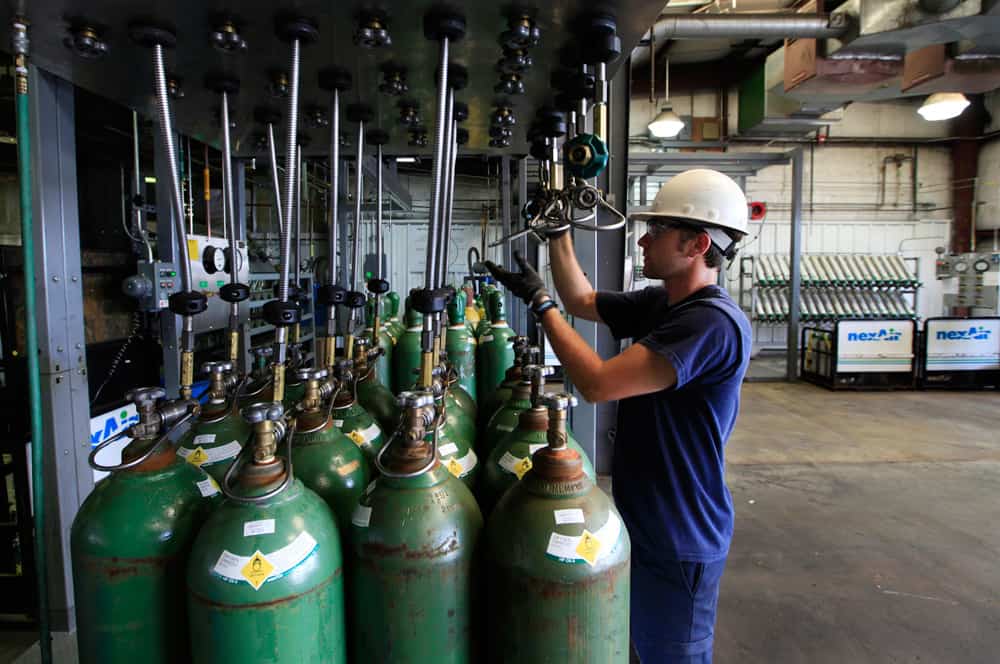
nexAir supports healthcare customers with bulk supply, cylinders, and portable oxygen and nitrogen systems, allowing supply approaches to be matched to different healthcare environments.
A continuity strategy should be designed around the facility rather than copied from another operation.
Visibility Helps Teams Respond
During normal operations, knowing where gas assets are located saves time.
During a disruption, that information can become even more valuable.
Healthcare organizations may have cylinders distributed throughout patient-care areas, laboratories, storage rooms, and multiple buildings.
Trying to locate those assets manually can slow the response when demand changes.
nexTrack helps customers improve visibility into cylinder assets, providing another layer of information for teams managing gas inventory.
Better visibility helps facilities understand what they have before they need it.
Local Supply Relationships Matter
Resilience is not only about what is stored on site.
The supply network behind the facility matters too.
Healthcare organizations benefit from working with suppliers that understand their normal usage and can respond when requirements change.
A sudden increase in demand is easier to communicate when the supplier already knows the facility, products, and delivery requirements.
For healthcare organizations throughout the Southeast, access to nexAir’s regional distribution network and local support creates another layer of supply reliability.
Strong supplier relationships are built during normal operations so they are already in place when something changes.
Maintenance Supports Resilience
Infrastructure that is not maintained eventually becomes less reliable.
Medical gas equipment and monitoring systems need appropriate service to help ensure they continue performing as intended.
Preventive maintenance also gives facility teams an opportunity to identify potential problems before they become unexpected failures.
nexAir supports healthcare customers with medical gas installation, maintenance, and monitoring services.
That ongoing support is an important part of treating medical gas infrastructure as a long-term system rather than a one-time installation.
Resilience Includes Accurate Information
Healthcare teams make decisions based on information.
Monitoring systems help facility personnel understand supply conditions. Clinical and laboratory equipment may depend on calibration to provide accurate measurements.
Specialty calibration gases can support that process by providing known reference concentrations used to verify instrument performance.
nexAir’s Specialty Gas Laboratories support healthcare applications with calibration mixtures, analytical gases, and other high-purity products.
Reliable information makes it easier for teams to recognize changes and respond appropriately.
Facility Growth Can Change the Resilience Plan
A facility that was well prepared five years ago may not have the same level of resilience today.
Patient volume may have increased. New departments may have opened. Gas consumption may have changed. Additional buildings may have been added.
That is why resilience planning should be revisited as healthcare organizations grow.
Medical gas capacity, storage, reserve supply, monitoring, and distribution should all be evaluated when facilities expand or renovate.
Infrastructure should evolve alongside the organization.
Renovations Need Continuity Planning
Healthcare renovations present a particular challenge because existing clinical operations often continue during construction.
If medical gas infrastructure is being modified, teams need to determine how affected areas will continue receiving the gases they require.
Construction phasing, temporary arrangements, system access, and coordination between facility teams and qualified medical gas professionals all become important.
Those conversations should happen before construction begins.
Resilience means planning how the facility will continue operating during the change—not simply designing what the finished project will look like.
People Are Part of the System
Infrastructure alone does not create resilience.
Employees need to understand the systems they work with and know what to do when conditions change.
Facility teams should understand normal medical gas operations and the procedures that apply when something unusual occurs.
Clear responsibilities and good communication make it easier for people to respond effectively.
Equipment provides capability.
Experienced people turn that capability into a working plan.
How nexAir Helps
nexAir supports healthcare organizations with medical gases and the infrastructure needed to keep those products available.
Capabilities include bulk gas supply, cylinders, portable oxygen and nitrogen systems, installation, maintenance, and monitoring.
Medical gases are produced at FDA-compliant fill plants, while nexAir’s specialty gas capabilities support analytical, calibration, diagnostic, and research applications.
Through nexAir KnowHow, healthcare customers can work with experienced professionals who understand how gas supply fits into larger facility operations.
Helping Customers Forge Forward
nexAir customers Forge Forward by preparing healthcare facilities to continue supporting clinical teams when normal conditions change.
Reliable supply, reserve planning, maintained infrastructure, asset visibility, and responsive local support all contribute to a stronger operation.
Resilience Is Built Every Day
Healthcare resilience isn’t created during an emergency.
It comes from decisions made long before one happens.
Maintaining equipment, understanding demand, planning reserve supply, improving visibility, and building dependable supplier relationships all help facilities prepare for unexpected conditions.
When those systems work together, healthcare teams have a stronger foundation for continuing the work patients depend on.


Don't see what you're looking for?
Everything we offer is a click away and it will arrive before you know it.