Building Operational Resilience in Chemical Facilities
Chemical facilities are built around controlled processes, but the conditions surrounding those processes can change quickly.
Production demand increases. Equipment requires maintenance. A delivery is delayed. A critical component fails. Raw material availability changes. Weather affects transportation or utilities. A plant adds capacity that puts more demand on infrastructure originally designed for a smaller operation.
Operational resilience is the ability to keep those challenges from becoming major disruptions.
For chemical manufacturers, resilience doesn’t come from one backup system or emergency plan. It comes from building reliability into gas supply, equipment, infrastructure, inventory, maintenance, and supplier relationships before something goes wrong.
Start with the Processes That Cannot Stop
Every facility has critical processes.
The first step in resilience planning is understanding which operations would create the greatest impact if they were interrupted.
If an industrial gas is essential to production, how long can the process operate if the primary supply is unavailable? Is reserve capacity available? How quickly can additional product arrive?
The same questions apply to equipment, utilities, instrumentation, and other production inputs.
Identifying those dependencies helps facilities focus resources where an interruption would matter most.
Build Reliability Into Gas Supply
Industrial gases can serve as raw materials, reactants, inerting agents, combustion inputs, cooling media, or process-support products throughout chemical manufacturing.
That makes gas availability an operational issue.
Supply planning should account for normal consumption, peak production periods, delivery frequency, storage capacity, and unexpected increases in demand.
Facilities should also periodically review whether their existing delivery method still matches production.
A cylinder-based application may grow into something better supported by a manifold, MicroBulk, or bulk system. A higher-volume process may need additional storage or reserve capacity as production expands.
Resilience comes from planning around actual demand instead of waiting until supply becomes a bottleneck.
Think About Redundancy Where It Matters
Not every system needs a duplicate.
Critical systems, however, may need a backup strategy.
For gas supply, that could mean reserve product or infrastructure designed to maintain flow while the primary source is being replenished or serviced.
The right level of redundancy depends on the process and the consequences of an interruption.
A laboratory instrument used occasionally has very different continuity requirements from a gas-fed production process running around the clock.
Good resilience planning focuses investment where downtime creates the greatest operational risk.
Maintain the Infrastructure You Already Have
Resilience isn’t only about installing new equipment.
Maintaining existing infrastructure can be just as important.
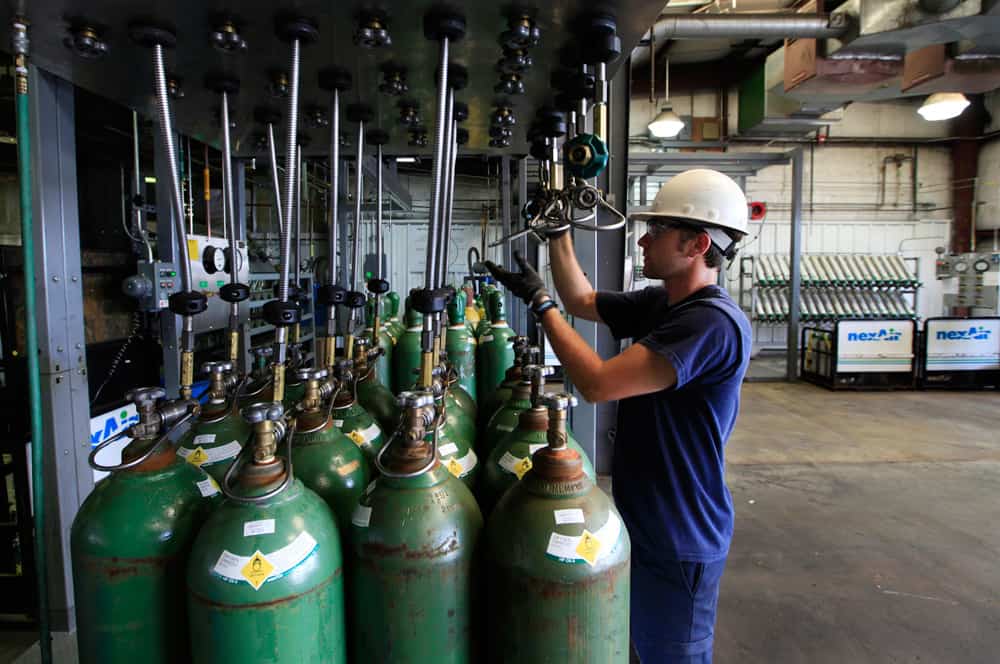
Regulators, manifolds, piping, valves, monitoring equipment, and other gas-system components need to perform consistently. Preventive maintenance helps identify wear, leaks, or performance changes before they become production problems.
The same thinking should extend across the facility.
If equipment repeatedly requires emergency attention, the operation is already providing useful information: something needs to change.
Planned maintenance is almost always easier to manage than an unexpected shutdown.
Accurate Information Helps Teams Respond Faster
When something changes, employees need reliable information.
Process monitoring, gas detection, instrumentation, inventory visibility, and properly calibrated analytical equipment all help teams understand what is happening.
Specialty calibration gases can play an important role here by providing known reference concentrations used to verify instrument performance.
nexAir’s specialty gas capabilities include NIST-traceable mixtures, custom certified calibration blends, industrial hygiene mixtures, EPA Protocol products, and other precision gases produced for analytical applications.
Good data helps teams identify problems faster and respond with greater confidence.
Local Support Adds Another Layer of Resilience
Supplier relationships become particularly important when normal operations are disrupted.
A reliable supplier already understands what gases the facility uses, how they are supplied, and which applications are most important.
That knowledge can make communication much easier when demand changes unexpectedly.
Local and regional support also matters because industrial operations don’t always encounter problems during convenient business hours. nexAir’s Southeastern network is built around local facilities and regional support, and the company advertises 24/7 emergency assistance for urgent gas needs.
A supplier should be part of continuity planning—not someone the facility meets for the first time during an emergency.
Plan Growth with Resilience in Mind
Facility expansion creates an opportunity to strengthen operational resilience.
New production lines may increase gas consumption. New processes may require different gases or higher purity. Additional analytical equipment may change specialty-gas requirements.
Infrastructure that worked well at one production level may become less reliable when pushed beyond what it was originally designed to support.
Growth planning should therefore include gas storage, delivery capacity, reserve supply, monitoring, maintenance access, and future expansion.
Building those considerations into the project is usually easier than retrofitting them later.
How nexAir Helps
Through nexAir KnowHow, nexAir works with chemical manufacturers to understand how gases fit into the larger production process.
nexAir supports chemical applications involving production gases, combustion, cryogenic cooling, specialty gases, testing, and other process requirements. Its broader capabilities include high-volume filling, specialty mixtures, bulk gas systems, and technical support.
That allows customers to evaluate not only which gas they need, but how the complete supply system can support reliable operations.
Helping Customers Forge Forward
nexAir customers Forge Forward by preparing their operations to handle change without losing sight of production.
Reliable supply, maintained infrastructure, accurate information, reserve planning, and experienced support all help chemical facilities respond when conditions don’t go according to plan.
Resilience Is Built Before the Disruption
Operational resilience isn’t something a facility creates during an emergency.
It’s built during normal operations.
Every maintenance decision, supply plan, infrastructure investment, and supplier relationship contributes to how well the facility responds when something unexpected happens.
The better those systems work together, the better prepared chemical manufacturers are to keep critical processes moving.


Don't see what you're looking for?
Everything we offer is a click away and it will arrive before you know it.