Supporting Modern Healthcare Infrastructure
Healthcare infrastructure includes far more than exam rooms, operating suites, and patient beds.
Behind the walls and throughout the facility are systems that support patient care every hour of every day. Electrical power, HVAC, water, communications, emergency systems, and medical gas infrastructure all have to work reliably—often without patients ever knowing they are there.
Medical gases are a critical part of that environment.
Hospitals, surgery centers, dental offices, hyperbaric treatment centers, laboratories, and other healthcare facilities depend on gases for patient care and clinical operations. As healthcare facilities grow and technology changes, the infrastructure supporting those gases has to keep pace.
Modern healthcare infrastructure should be planned around reliability, visibility, maintainability, and the needs of the people providing care.
Medical Gas Supply Is Facility Infrastructure
Medical gases shouldn’t be treated like ordinary supplies.
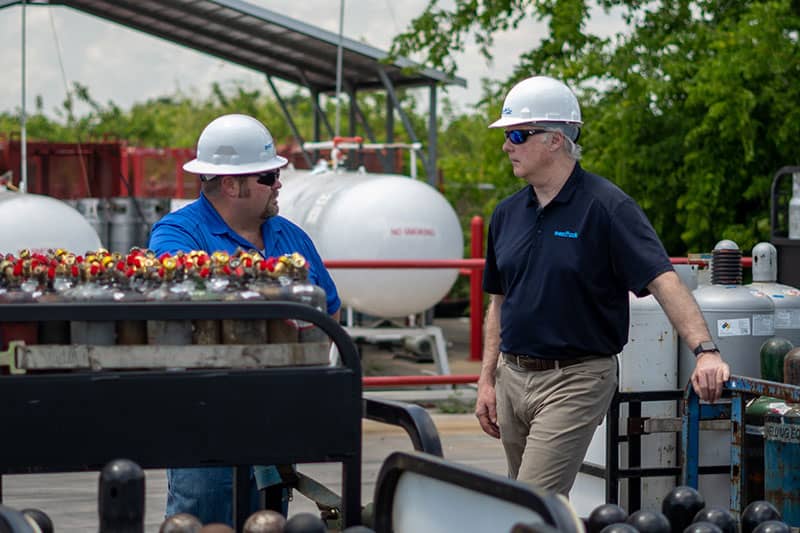
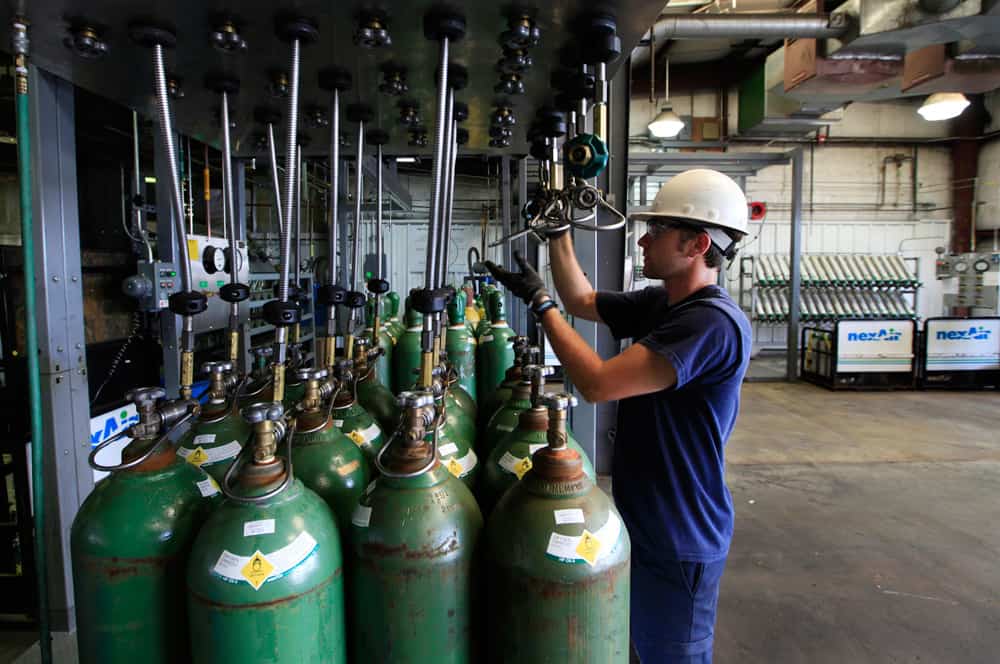
Depending on the facility, gases may be provided through cylinders, portable systems, or centralized bulk supply connected to the building’s distribution infrastructure.
nexAir supports healthcare customers with bulk gas supply, cylinders, and portable oxygen and nitrogen systems, along with installation, maintenance, and monitoring.
The right approach depends on patient volume, clinical applications, facility design, gas consumption, and future needs.
A small outpatient facility will not require the same infrastructure as a regional hospital.
Planning should start with the way care is actually delivered.
Reliability Has a Direct Connection to Patient Care
In manufacturing, a supply interruption may stop production.
In healthcare, the consequences can be much more serious.
Medical gases may support operating rooms, emergency departments, respiratory therapy, patient rooms, laboratories, and other clinical areas.
Facilities therefore need confidence in both the quality and continuity of supply.
nexAir produces medical gases for hospitals, surgery centers, hyperbaric wound treatment centers, dental offices, and home healthcare customers at FDA-compliant fill plants.
Reliability needs to be built into the infrastructure supporting those products.
Different Departments Create Different Demands
A modern healthcare facility isn’t one gas application.
It’s many.
Patient care may require medical oxygen. Surgical and anesthetic procedures have their own requirements. Clinical laboratories may use high-purity or calibration gases. Research operations can introduce additional specialty-gas needs.
nexAir’s medical and healthcare specialty gas offering includes medical oxygen and nitrogen, calibration gases, anesthetic and respiratory mixtures, and analytical gases used in laboratory testing, diagnostics, and research.
Facility planning needs to account for those differences rather than treating gas demand as one number.
Visibility Helps Facilities Manage Supply
As healthcare systems grow, medical gas management becomes more complicated.
A facility may have cylinders spread across multiple departments, reserve inventory, portable systems, and centralized supply operating at the same time.
Visibility helps facility teams understand what is available and where resources are being used.
nexTrack is one tool nexAir uses to support healthcare gas management, with capabilities around supply visibility and usage patterns across departments.
Better information can help facility teams stay ahead of supply requirements instead of reacting when inventory becomes critical.
Maintenance Protects the Investment
Medical gas infrastructure has to continue performing after installation.
That makes maintenance part of long-term facility planning.
Supply equipment, monitoring systems, and other components need appropriate inspection and service so teams can identify problems before they become larger disruptions.
nexAir specifically provides installation, maintenance, and monitoring for healthcare gas systems it supports.
A system designed well but maintained poorly won’t provide the reliability a healthcare facility needs.
Storage Has to Be Planned Properly
Cylinder storage is another part of healthcare infrastructure that deserves attention.
Medical gas storage requirements can vary based on the gases involved, quantities stored, and location within the facility. nexAir’s healthcare compliance guidance notes that NFPA 99 requirements become more stringent as aggregate compressed-gas storage volume increases.
That means storage should be considered during facility planning rather than after clinical spaces have already been designed.
Accessibility, security, handling, ventilation, and applicable code requirements all have to be considered.
Infrastructure Should Support Growth
Healthcare demand changes.
A hospital may add beds. A surgery center may add procedure rooms. An outpatient network may open new locations. A laboratory may install equipment that changes specialty-gas requirements.
Medical gas infrastructure should be evaluated whenever those changes occur.
A system designed around today’s patient volume may not be the best system for tomorrow’s facility.
Planning for capacity and future expansion can help healthcare organizations avoid unnecessary disruption later.
How nexAir Helps
nexAir works with healthcare organizations across the Southeast to support medical gas supply and infrastructure.
Its healthcare capabilities include bulk gas systems, cylinders, portable oxygen and nitrogen systems, installation, maintenance, and monitoring. Medical gases are produced at FDA-compliant fill plants, while specialty mixtures are supported by ISO/IEC 17025:2017-accredited Specialty Gas Laboratories.
Through nexAir KnowHow, customers can work with experienced specialists to evaluate the application and build supply around the needs of the facility.
Helping Customers Forge Forward
nexAir customers Forge Forward by building healthcare infrastructure that allows clinical teams to stay focused on patients instead of worrying about gas supply.
Reliable systems, dependable gases, good visibility, and knowledgeable support all contribute to healthcare facilities prepared for the demands placed on them every day.
Good Infrastructure Works Quietly in the Background
The best healthcare infrastructure often goes unnoticed.
It simply works.
Medical gases arrive where they’re needed. Supply is maintained. Equipment performs reliably. Facility teams have visibility into the system.
That quiet reliability gives healthcare professionals one less thing to worry about while they focus on what matters most: caring for patients.


Don't see what you're looking for?
Everything we offer is a click away and it will arrive before you know it.